
Why F1 Cars Use Smooth Tires: Understanding Tread Patterns
When watching Formula 1, you might have noticed that the race cars use perfectly smooth tires, without any tread pattern—known in the industry as "bald tires." The reason is simple: the smoother the tread, the closer it adheres to the ground, maximizing contact area and providing maximum grip on dry surfaces, allowing for higher speeds in corners.
However, don't assume racing tires are always bald. The moment it rains, teams immediately pit for grooved rain tires. One set for dry conditions, another for wet—two completely different things. But ordinary cars can't afford such fuss. A single set of tires needs to handle all road conditions, so tread patterns are essential, especially for drainage in rainy weather.
What exactly are those grooves doing? Those grooves on the tire tread aren't just randomly etched for aesthetics. They serve two purposes: drainage and braking performance, wear resistance, and handling. In short, different tread patterns are designed for different road conditions.
Roads after rain are incredibly slippery, with the coefficient of friction dropping to less than half that of dry asphalt. Braking power is reduced, making the car prone to skidding and significantly increasing braking distance. If the tires don't drain well, water can't escape, the tread won't keep up with the ground, and the entire tire will "slide" across the water – this is what experienced drivers often refer to as "hydroplaning," at which point the steering wheel and brakes are essentially useless. Furthermore, standing water can push against the tires, adding extra resistance. Therefore, the arrangement of the grooves is crucial.
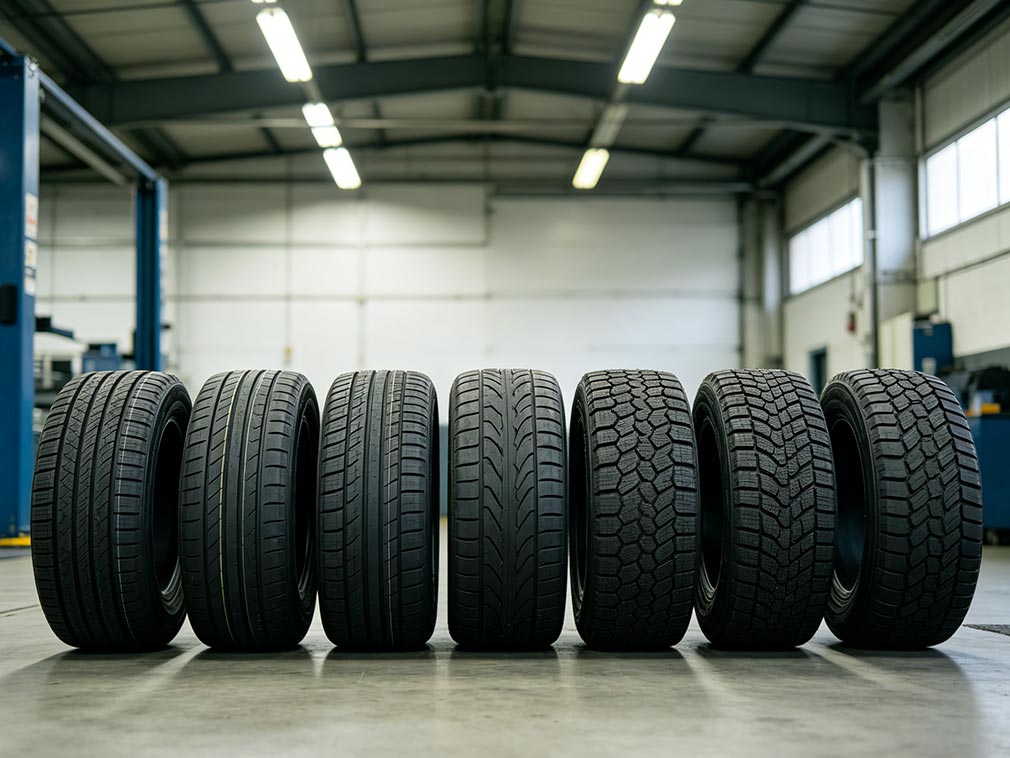
7 Tread Patterns, Each with Different Characteristics
1. Unidirectional Tread Pattern
Easily recognizable, the tread pattern is V-shaped or arrow-shaped, with grooves diagonally intersecting the direction of travel, effectively locking the rolling direction. When installing, you must follow the arrows; installing it backwards will significantly reduce its effectiveness.
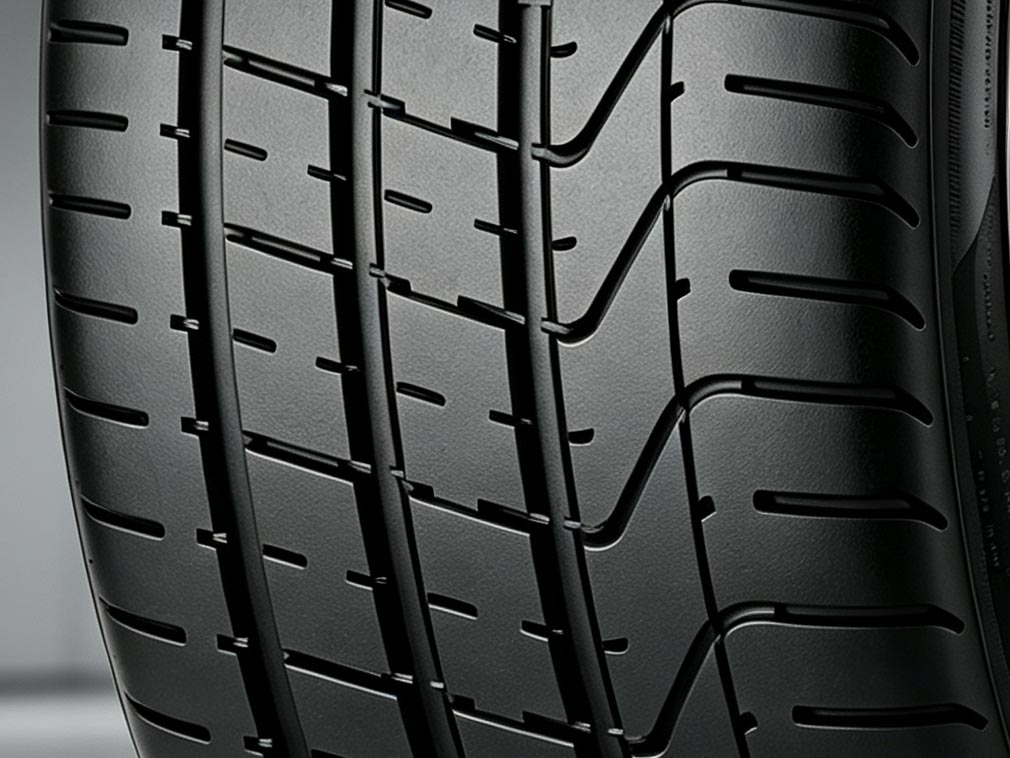
Sporty sedans and SUVs often use this pattern. It offers strong directional control, large tire blocks, low rolling resistance, high speed, and agile handling, with excellent water drainage. The trade-off is obvious: it's noisy. It can't be switched between left and right sides, making it unsuitable even as a spare tire.
2. Striped Tread Pattern (Vertical Tread)
Longitudinal grooves running in concentric circles around the circumference, one or several connected.
This is particularly favored by the front wheels (steering wheels) of trucks and buses. It improves steering accuracy, drainage is good, it's quiet at high speeds, dissipates heat quickly, and has low rolling resistance, making it less prone to skidding. The downsides are average grip, mediocre braking and wet-weather performance, and it's prone to cracking under prolonged high loads.
3. Symmetrical Tread Pattern
Using the central groove as an axle, the tread patterns on both sides are the same or similar. Even if you rotate it 180 degrees, the patterns will still align.
These are ubiquitous in economy cars and urban SUVs. They prioritize quietness, comfort, low rolling resistance, and fuel efficiency; for reliability and durability, this is a good choice. However, the tread pattern used in smaller cars is more fragmented, resulting in weaker grip, so don't expect much in terms of sportiness.
4. Asymmetrical Tread Pattern
The central groove still acts as the axis, but this time the tread patterns on the left and right sides are different. Generally, the inner side is more for drainage, while the outer side is more for grip and cornering, combining the characteristics of strip and block patterns.
Commonly used in sports sedans and SUVs. The tread blocks are larger than the symmetrical type, resulting in a larger contact patch, stronger grip, and better handling. However, larger blocks also mean more noise, compromising quietness and comfort.
5. Block Tread Pattern
The tread is divided into independent small squares by horizontal and vertical grooves, which are not connected to each other.
Commonly used in snow tires, rear wheels (drive wheels) of commercial vehicles, engineering vehicles, and off-road vehicles. Excellent braking and handling, strong driving and braking power, and stable on snow and wet roads. However, this independent block structure is inherently less wear-resistant, has a shorter lifespan, and higher rolling resistance.
6. Rackhorn Tread Pattern (Horizontal Tread Pattern)
The grooves are perpendicular to the circumference, running horizontally.
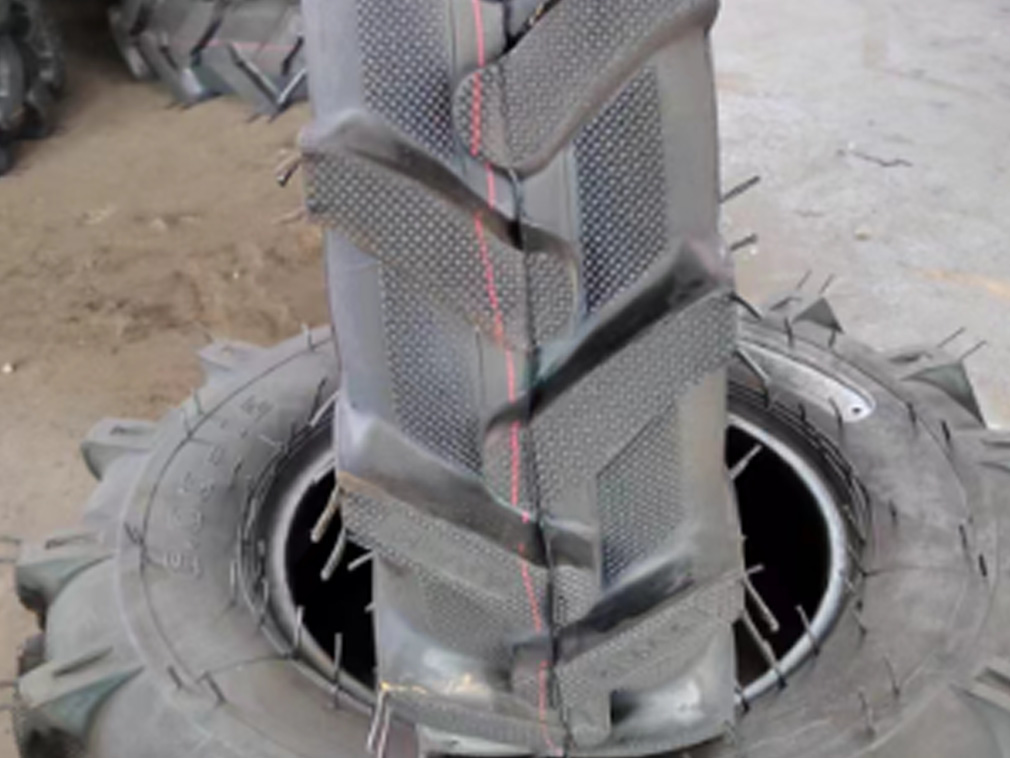
Industrial vehicles, bus rear wheels, agricultural machinery (harvesters, tractors, etc.), construction machinery, and large tractor units all rely on it. It offers excellent grip, and both braking and traction are strong. However, it's fuel-inefficient, not very durable, and not suitable for high-speed driving—on highways, it's noisy, bumpy, and has high drag.
7. Composite Tread Pattern (also called mixed tread pattern, longitudinal and transverse groove pattern)
This combines the advantages of stripe and horn patterns.
It's particularly common on trucks, buses, and SUVs. The central stripe pattern provides handling and anti-skid properties, while the horn-shaped patterns on the shoulders provide traction and braking. It's currently the most widely used tread pattern.






