
German Semi-Trailers Hit €40K Under EU Rules(August 19)
German Semi-Trailers to Hit 40,000 Euros! EU Regulations Push Too Hard, 8 Trailer Manufacturers Sue
The gates of the Hannover Exhibition Center remain shut in the summer holiday season, quiet enough to make one miss the serenity. Yet four weeks from September, the venue will come alive—commercial vehicle manufacturers will kick off the second-half exhibition season here. The Hannover International Transportation Expo (IAA), the premier global gathering for the truck, trailer, and light commercial vehicle industry, will once again convene industry elites to discuss a question that leaves them anxious: where does the future path to survival lie?
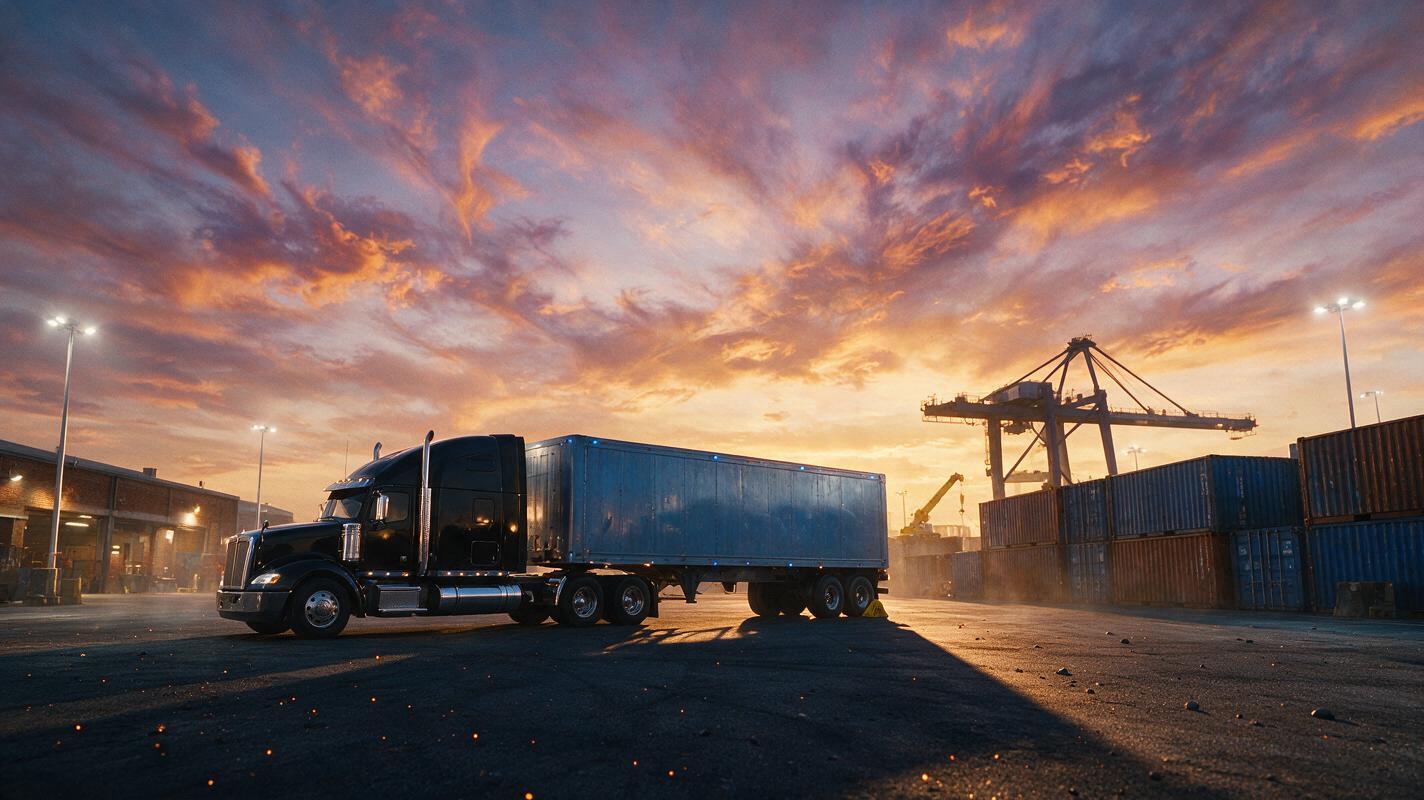
Unprecedented Pressure on the Logistics Industry
The logistics industry faces unprecedented pressure. Geopolitical storms and supply chain vulnerabilities make mere survival a battle. Meanwhile, the EU's carbon reduction agenda is quietly accelerating this fight. Without timely transformation, escalating CO2 penalties—amounting to billions of euros in astronomical fines—will push some companies to the brink of life and death. This is the severe test brought by EU Regulation 2024/1610, which requires commercial vehicle manufacturers to reduce emissions of newly registered vehicles by 45% relative to the 2021 baseline by 2030, and by 65% by 2035, with full implementation by 2040.
The Gap Between Political Dreams and Reality
Brussels politicians dream of improving air quality, reducing fossil fuel dependence, and restoring Europe's technological leadership through electrification. However, reality resembles a dramatic misunderstanding. Electric truck growth, while showing some improvement—Germany registered only 1,400 new electric trucks last year, up 38% year-on-year—still accounts for a negligible share: electric vehicles make up only 2.6% of all newly registered trucks, and a mere 0.2% of all registered heavy commercial vehicles in Germany. Hydrogen power? The hype from a few years ago has long cooled, remaining virtually silent in the heavy truck sector.
Charging Infrastructure: The Missing Foundation
The primary reason for the slow adoption of electric trucks is the lack of charging infrastructure. Without charging stations, battery trucks cannot operate stress-free in long-haul freight. High-power, fast-charging mega-stations remain prohibitively scarce. Professor Dirk Engelhardt, spokesperson for the German Federal Road Freight Transport Association, was blunt: for electric trucks to be profitable, electricity prices must not exceed 0.29 euros per kWh. Above that threshold, the economics no longer work. Currently, the charging network built through the Milens partnership charges 0.39 euros per kWh, causing many freight companies to stick with diesel.
Purchase Price and Weight: Dual Barriers
The purchase price of electric trucks is an even greater barrier—typically two to three times that of traditional diesel trucks. Although Germany currently exempts electric trucks from road tolls, saving approximately 0.35 euros per kilometer, the 35,000 euros saved annually (based on 100,000 km) still cannot offset the high acquisition cost. Moreover, the toll exemption will end after 2031. Engelhardt pointed out that the government needs this revenue, and electric trucks will be brought into the toll system, further weakening their economic viability.
Another issue with battery trucks is weight. Their battery packs significantly increase overall weight, reducing payload capacity and making them less flexible than diesel trucks. As a result, electric trucks currently have advantages mainly in niche markets such as urban logistics and waste collection. In these scenarios, vehicles can return to the depot daily for charging, even leveraging green power from photovoltaic systems to minimize costs. However, for most freight companies, the conditions for transition simply do not exist.
The Dilemma for Trailer and Semi-Trailer Manufacturers
This in turn affects truck manufacturers. If manufacturers cannot sell enough battery vehicles, they must pay billions of euros in fines to Brussels. Maximilian von Loebeck, Managing Director of Renault Trucks Germany, candidly stated: "The transport transition is not waiting for electric trucks—the vehicles are ready, but the problem is insufficient infrastructure. Fines only drain manufacturers' working capital, preventing them from continuing R&D and technology upgrades."
The situation is even more complex for trailer and semi-trailer manufacturers. Since trailers and semi-trailers have no powertrain, meeting EU emissions requirements forces manufacturers to reduce vehicle size and lower aerodynamic drag—which inevitably reduces loading capacity. Frank Albers, Managing Director of Krone, pointed out: if trailer loading capacity decreases, freight companies can only add more trucks, which increases road traffic and actually raises CO2 emissions—directly contradicting the EU's goals.
He stated that the only option is to use lighter materials, aerodynamic components, and low-rolling-resistance tires. But even so, the emission reduction for semi-trailers can only reach 7.5%, while the EU demands 10%. This means manufacturers need to invest an additional 6,000 to 7,000 euros per unit, with potential fines looming in the future. Albers warned that a standard semi-trailer will rise to 40,000 euros—potentially a 50% cost increase. This will force freight companies to raise service prices, ultimately pushing up the cost of living for residents.
Chinese Manufacturers' Opportunity
Faced with this situation, some truck manufacturers are seeking alternatives. Acquiring local manufacturers enables faster entry into the European market while leveraging existing service and maintenance networks. Von Loebeck noted that some companies' capital comes from successful sales in domestic, Asian, and Middle Eastern markets. Five years ago, Chinese truck manufacturers held only a 7% market share in the Middle East; today, that figure has climbed to 70%. Long-term resource security, technology accumulation, and cost advantages give these companies a clear competitive edge in the European market.
Eight Trailer Manufacturers Sue
The German Association of the Automotive Industry has long recognized that the EU's carbon reduction regulations pose enormous risks to truck and trailer manufacturers. They called on the European Commission last year to re-examine the targets, arguing they are overly stringent and constitute a threat to corporate survival. However, the European Commission has yet to respond. Consequently, eight European trailer manufacturers have filed a lawsuit with the European Court of Justice, hoping to alleviate the pressure through legal means. The outcome of the litigation remains uncertain.
With the Hannover expo approaching, manufacturers are searching for breakthroughs.
This platform focuses on the import and export of Chinese automotive equipment, gathering hundreds of certified Chinese automotive suppliers and connecting with global buyers. The platform achieves full transaction transparency, expands diverse cooperation opportunities, and helps both domestic and foreign parties build deep and stable cooperation bonds. Whether you are looking for vehicle manufacturers, purchasing automotive parts, or need customized procurement solutions, CNAUTO is your trusted first choice for cooperation.






