
Used Auto Market Upgrade
The domestic used car market has now entered a phase of significant differentiation. New energy used cars are the fastest-growing segment, significantly outpacing the steady growth of traditional gasoline-powered vehicles. Public data shows that from January to May 2026, a total of 685,400 new energy used cars were traded nationwide, a year-on-year increase of 25.7%; among them, the transaction volume in the first four months was 547,900 vehicles, a year-on-year increase of 29.1%, maintaining a high growth rate for several consecutive months.

The new car market is even more dynamic. In 2026, 5.802 million new energy vehicles were sold, accounting for 47.5% of total new car sales. This near-half penetration rate directly results in a continuously increasing social car ownership, leading to a thicker supply of vehicles entering the used car market. The circulation of new energy used cars is no longer confined to a small circle, but is beginning to move towards large-scale and normalized operations.
However, the rapid increase in transaction volume has also amplified its shortcomings. The continuously declining residual value and the fragmented pricing system are the core contradictions that the industry cannot avoid, and the main stumbling block to the healthy development of the market. Jingzhen Gu's monitoring data has already revealed this: the three-year residual value of pure electric vehicles has fallen from 54.7% in 2023 to 45.2% in the first half of 2026, a cumulative drop of 9.5 percentage points over three years.
The situation for gasoline-powered vehicles has also not stabilized, with the three-year residual value falling from 67.6% in 2022 to 52.7%. The gap between the two is visibly narrowing, and the previous situation where "the residual value of gasoline-powered vehicles was much higher than that of new energy vehicles" has been completely broken. The entire value system of the used car market is undergoing a profound reshuffle.
To truly gauge the market's temperature, one must look at compact family cars. This category is the mainstay of used car transactions, and its residual value changes can more realistically reflect the overall trend. In the joint venture gasoline car segment, names like the Lavida, Sagitar, and Corolla have long been at the top of the resale value rankings, classic models chosen by consumers.
However, even these, impacted by increased new car discounts and fierce competition, have seen their three-year resale value drop below 50% across the board. This has completely shattered the long-held impression of high resale value for joint venture gasoline cars.
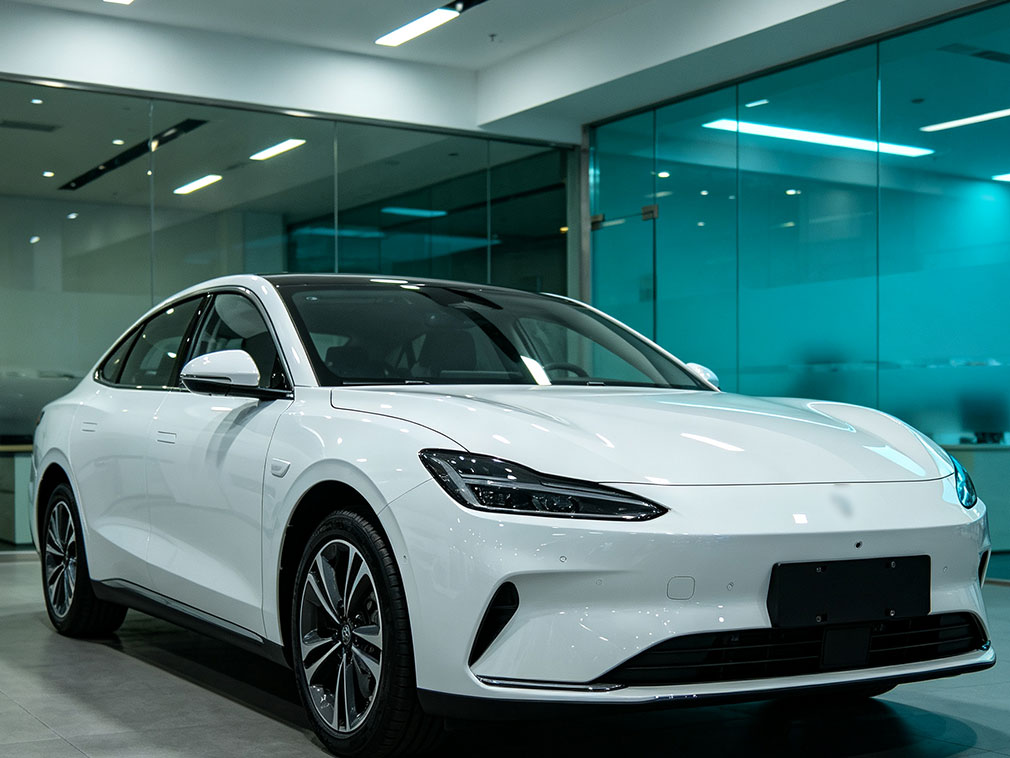
The situation is even worse for new energy compact cars. In the pure electric segment, the top three in resale value are the Volkswagen ID.3, BYD e2, and Qin PLUS. These are among the best, with relatively stable residual values, but their overall competitiveness is clearly weak. Even the top-ranked ID.3 hasn't reached 45% resale value after three years, clearly demonstrating the fragility of the residual value base for mainstream new energy family cars.
In retrospect, the root cause of this disruption and reconstruction of the used car pricing system lies in the price transmission within the new car market. From 2025 to 2026, the domestic new energy vehicle market will see wave after wave of intense competition. To maintain market share and retain existing customers, manufacturers are employing increasingly aggressive tactics: price cuts, added features, and the launch of new models.
This round of competition is causing the overall price center of the new car market to shift downwards. As new car prices continue to fall, used new energy vehicle prices can only follow suit, unable to withstand the pressure even for a day. Simultaneously, rapid advancements in battery technology, accelerated upgrades to vehicle features, and continuous optimization of official warranty policies mean that models launched a year or two earlier, or even just a few months earlier, are easily becoming outdated, further squeezing their resale value.
Used gasoline-powered cars face just as many challenges. The impact of new energy vehicle substitution, increased new car discounts, and stricter environmental policies are all weighing on the market, forcing their resale value to decline as well. The old perception that "gasoline cars hold their value stably, while new energy vehicles are highly volatile" has been completely overturned by reality.
Looking back, the new energy used car market is now clear: transaction volume is steadily increasing, residual value is declining, and the differentiation between different models is becoming increasingly pronounced. The increase in transaction volume is due to the ever-growing base of new energy vehicle ownership, coupled with changing consumer attitudes and the undeniable value for money in the used new energy vehicle market. The overall decline in residual value is simply a necessary stage in the early stages of the industry's large-scale development; it cannot be skipped.

As the market progresses, the standards for residual value assessment are also being refined. Looking ahead, the focus will no longer be solely on price fluctuations to judge a car's worth. Instead, a more detailed system will be implemented, taking into account factors such as the brand's technological foundation, battery health, model market reputation, and official maintenance systems.
With the gradual implementation of supporting services like battery data traceability, standardized vehicle condition inspections, and extended warranties, the price order in the new energy used car market will become clearer, and the transaction volume and value system will ultimately move towards a virtuous cycle of development.






