
Natural Rubber & Carbon Black Market Trends
As of July 15, 2026, the domestic and global natural rubber and carbon black markets showed a clear divergence. Prices were primarily supported by cost levels, while weak downstream demand during the traditional off-season resulted in a significant tug-of-war between bullish and bearish forces.
As core raw materials for tires and various rubber products, the price trends of these two commodities are deeply intertwined with downstream manufacturing operating rates and end-consumer demand, and are influenced by multiple factors including weather in major producing areas, raw material price fluctuations, changes in import and export trade, and industry policies.
Currently, the market lacks a clear unilateral upward or downward trend, and is mainly operating within a range. This article provides a detailed analysis of the market conditions for these two raw materials, combining the latest industry spot data, supply and demand status, and domestic and international market dynamics.
I. Latest Market Analysis of Natural Rubber in Domestic and International Markets
In mid-July 2026, the natural rubber market was in a period of supply and demand tug-of-war. Southeast Asian producing areas were in the traditional peak rubber tapping season, with raw material supply steadily increasing. However, the market had already priced in the potential production reductions caused by El Niño in the third quarter, making the bottom support for rubber prices relatively stable.
The overall market exhibited a clear range-bound trading pattern: downstream off-season demand and high inventory levels suppressed upward price movement, while weather-related speculation and production costs effectively locked in downward pressure, resulting in relatively mild market fluctuations.

From an international perspective, rubber tapping operations are progressing smoothly in key Southeast Asian rubber-producing countries such as Thailand, Indonesia, and Malaysia. Since late June, rainfall in southern Thailand has decreased, and the weather has stabilized, leading to a continuous recovery in latex production and alleviating the previous tight supply and high prices. However, the World Meteorological Organization officially announced the formation of El Niño on July 3rd, predicting its rapid intensification and a strong El Niño event expected between July and September.
This is highly likely to cause drought and low rainfall in Southeast Asian producing regions, directly impacting overall tapping efficiency and total output in the second half of the year, providing sustained sentiment support for international rubber prices.
As of July 15th, the main international natural rubber futures contract remained stable at a high level around 214 cents/kg, with market funds generally positioning themselves in advance for reduced production in the third quarter, effectively offsetting the supply pressure from increased production during the current peak season.
Meanwhile, affected by narrowing export profits, overseas rubber companies have proactively slowed down their shipments, leading to a slower growth in spot market circulation and further solidifying the bottom range of international rubber prices.
Domestic natural rubber spot and futures markets closely followed international trends, exhibiting an overall slightly bullish oscillation, but lacking upward momentum and limiting price increases. Inventory data shows that as of June 28, domestic natural rubber social inventory was 1.237 million tons, a slight decrease of 0.26 million tons from the previous period, but the overall inventory level remains high, which is the core factor restricting a significant rise in rubber prices.
The inventory structure shows significant differences: light-colored rubber inventory decreased by 1.59% month-on-month, with a stable destocking pace; dark-colored rubber inventory increased slightly, mainly to meet the immediate needs of domestic tire companies, highlighting a significant structural supply-demand differentiation in the market. Currently, it is the traditional off-season for tire production, with domestic companies maintaining a moderate operating rate.
Passenger and commercial vehicle end-user consumption remains stable, with no significant recovery or increase. Downstream factories generally adhere to a just-in-time purchasing strategy, with low willingness to stockpile large quantities, resulting in a relatively quiet spot trading atmosphere. Regarding imports and exports, natural rubber imports declined year-on-year in early July, which the market interpreted as a signal of supply-side adjustments overseas, leading to a slight short-term rise in prices.
However, this reduction in imports was mainly due to overseas manufacturers adjusting shipments based on profit margins, rather than a substantial contraction in production capacity. Further observation is needed to understand the subsequent trend. Overall, domestic natural rubber is unlikely to break out of its current trading range in the short term. The market will need to focus on the actual impact of weather conditions in producing areas, the progress of inventory reduction, and the recovery of tire industry operations.

II. Latest Analysis of Domestic and International Carbon Black Markets
As of July 15, 2026, the core logic of the carbon black market is concentrated on the cost side. Rising raw material prices have driven up prices, but weak downstream demand during the off-season has made it difficult for significant price increases to materialize, resulting in an overall "stable price, weak volume" trend.
Domestic market prices have been stable with a slight upward trend, and the competitive advantage in the export market continues to stand out. The industry's supply and demand structure is steadily improving, but weak end-user demand continues to suppress the upward momentum.
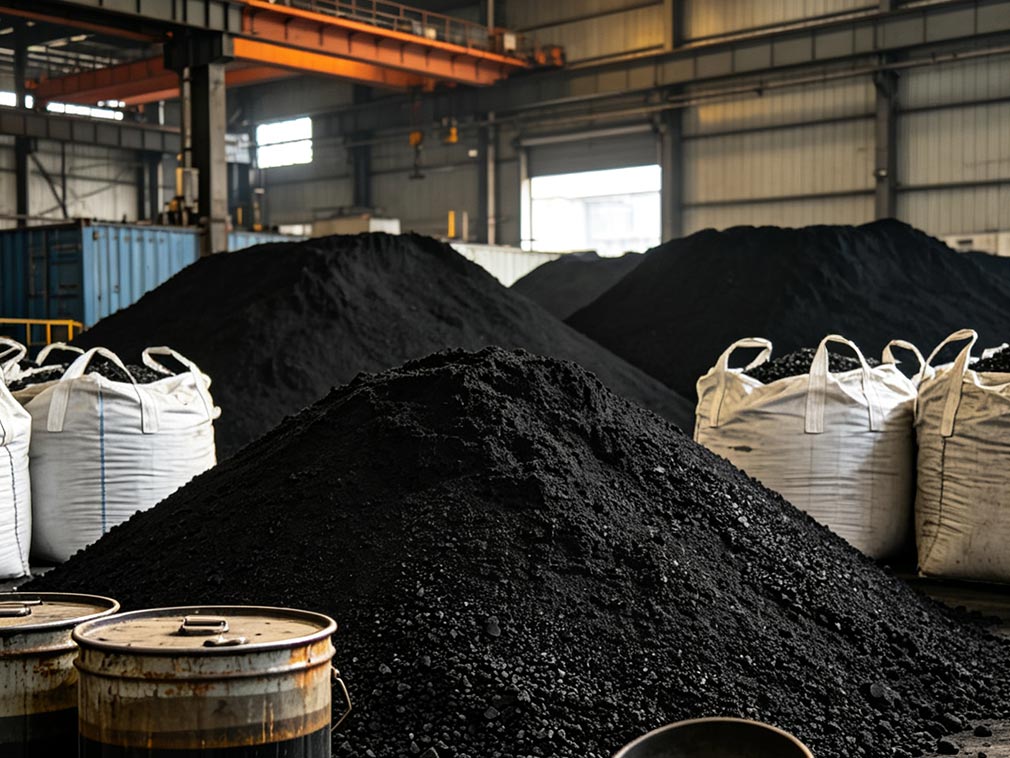
The current round of price increases in the domestic carbon black market is mainly driven by coal tar raw material prices. Since July, domestic coal tar prices have continued to rise, putting significant cost pressure on carbon black companies and driving a collective price increase across the industry. On July 1st, Cabot China took the lead by raising prices for all types of rubber carbon black, with a single price increase of RMB 800/ton. Subsequently, major domestic carbon black companies followed suit, with price increases ranging from RMB 200 to 400/ton.
As of July 14th, the benchmark price for domestic carbon black was RMB 8580/ton, with significant price differences between regions and grades. Prices for mainstream high-end carbon black such as N220 and N330 in major producing areas like Shandong, Shanxi, and Hebei remained at RMB 8500-8700/ton, while ordinary grades followed suit.
On the supply side, the overall operating rate of the domestic carbon black industry remained at around 75%, operating relatively smoothly. Industry concentration continued to increase, with leading companies releasing stable capacity, and small and medium-sized manufacturers flexibly scheduling production according to orders, resulting in ample overall market supply. The demand side is significantly weak: During the traditional off-season for the tire industry, new order signings are largely complete, leading to low acceptance of high carbon black prices and significant resistance.
Only niche sectors such as rubber products and industrial auxiliaries are seeing sporadic replenishment orders, resulting in limited overall transaction volume. The industry's price increases are taking effect slowly, exhibiting a "price increase, stable transaction volume" pattern.
The international carbon black market continues the positive export trend since 2026, with domestic products maintaining strong competitiveness in foreign trade, showing an overall pattern of increased exports and decreased imports. Supported by high international oil prices, overseas carbon black producers face persistently high raw material costs, while the cost-effectiveness advantage of domestic carbon black continues to amplify.
In the first four months of this year, carbon black exports increased significantly year-on-year, while the proportion of overseas imports continued to decline, with the share of traditional import sources such as Russia further shrinking. From a global industry perspective, industry data shows that the global carbon black market size is expected to reach US$22.26 billion in 2026, maintaining steady growth, mainly benefiting from the recovery of the overseas tire industry and the expansion of demand for industrial rubber products in emerging economies.
Currently, international spot prices are rising in tandem with the domestic market. Overseas downstream enterprises have stable long-term order contracts, and short-term restocking for immediate needs is proceeding smoothly, resulting in a generally stable foreign trade market. In the long term, the continued tightening of global environmental regulations and the ongoing phasing out of outdated, energy-intensive, and inefficient carbon black production capacity overseas are strengthening the global supply side, providing long-term support for international carbon black prices.
III. Overall Market Outlook
In the short term (July-August), the natural rubber market will continue to be caught in a tug-of-war between weather speculation and off-season demand. Without extreme droughts, floods, or other sudden weather disruptions, prices will remain range-bound, unlikely to break out of any particular trend. The carbon black market, supported by coal tar raw material costs, will maintain high prices, but limited by off-season demand, its upward potential is limited, and overall, prices will remain stable.
In the medium to long term, if El Niño continues to develop in the third quarter, production in Southeast Asia may be significantly constrained, increasing expectations of a tightening natural rubber supply. Coupled with the arrival of the traditional peak season in the downstream tire industry and a recovery in market demand, rubber prices have the potential for a phased upward trend.
In the carbon black market, as downstream manufacturing orders gradually recover and raw material costs remain high, market activity will steadily increase, prices will be relatively resilient, and are likely to maintain a steady upward trend in the future.






