
Electrification of Heavy Trucks: Trends & Challenges
The electrification of commercial vehicles is accelerating: Electric heavy-duty trucks are moving from mining areas to main roads
I. Policy-driven: Emission standards continue to tighten
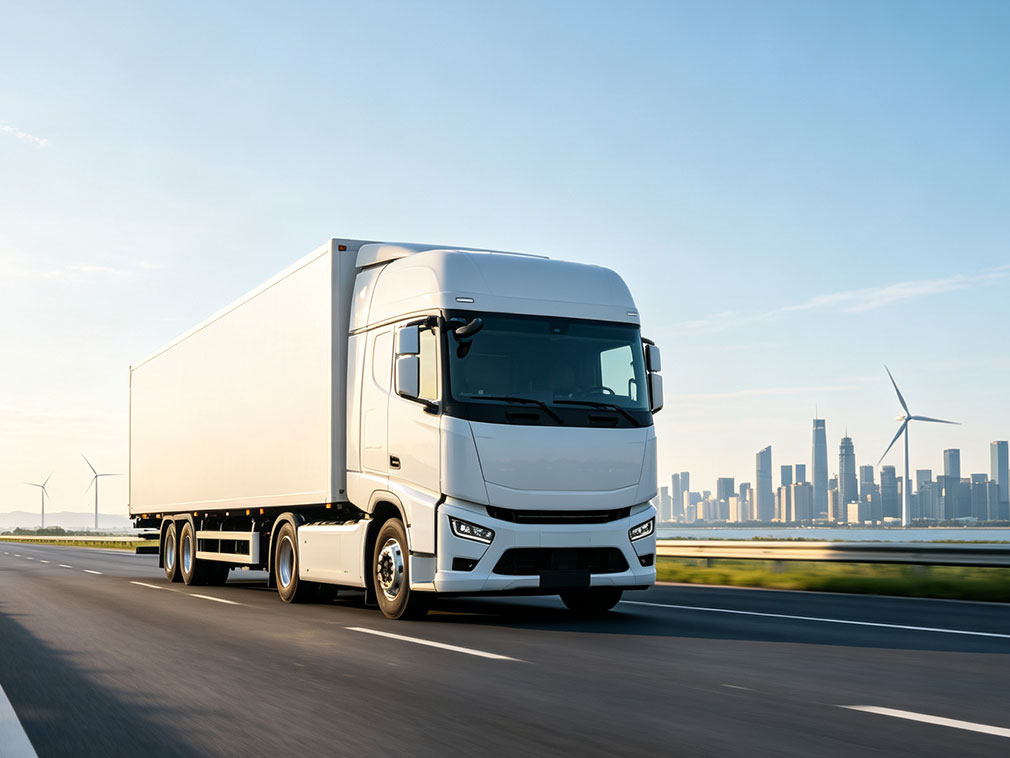
Emission regulations in major markets such as the EU, the US, and China are becoming increasingly stringent. The EU's Euro VI step E standard for heavy-duty commercial vehicles has been fully implemented since 2024, not only tightening limits on nitrogen oxides and particulate matter but also introducing more stringent Real Driving Emissions (RDE) testing requirements. The future Euro VII framework will further regulate braking particulate matter and tire wear emissions.
The US Environmental Protection Agency's (EPA) Phase III greenhouse gas emission standards for heavy-duty vehicles, starting in 2027, will force OEMs to significantly increase the proportion of zero-emission vehicles. China's China VI b standard has been fully implemented, and remote emission monitoring and durability requirements have significantly increased the compliance costs for traditional diesel vehicles. At the same time, many cities are releasing clear road rights benefits for new energy commercial vehicles. For example, Beijing, Shenzhen, and Chengdu offer all-weather passage convenience to pure electric trucks, while diesel trucks are restricted during peak hours and in key areas.
The GCC standard in the Gulf region is gradually aligning with Euro 6, and Southeast Asian countries such as Thailand and Indonesia are also upgrading their environmental and noise regulations. Once emission and noise limits are raised, the adaptation costs and complexity of after-treatment systems for traditional fuel vehicles will increase accordingly, making compliance a key hurdle for entering new markets.
Driven by carbon reduction targets in the transportation sector in many countries, the priority electrification of urban logistics and public transportation has moved from vision to implementation, opening a policy window of certainty for new energy commercial vehicles.
II. Scenario Breakthrough: From "Short-Term Delivery in Mines" to "Regional Distribution"
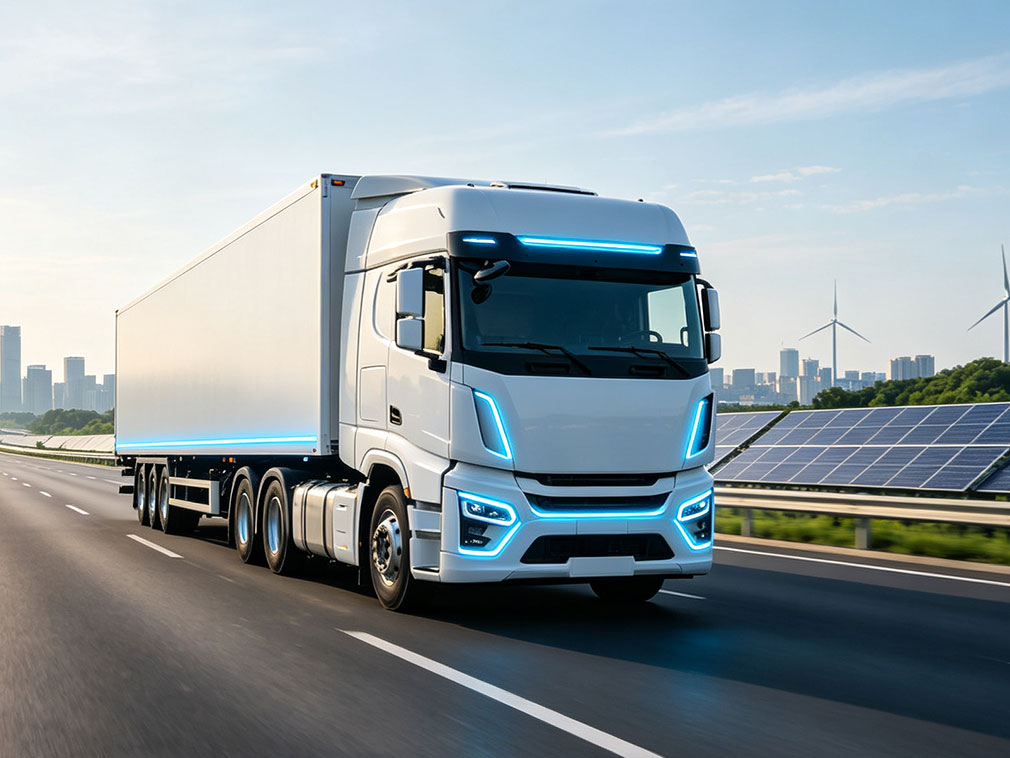
Electric heavy-duty trucks have achieved large-scale application in closed and short-term delivery scenarios such as mines, ports, and steel mills. These scenarios have fixed operating radii, with daily mileage typically within 150 kilometers, making it easy to deploy energy replenishment facilities such as loaders and battery swapping stations.
Electric heavy-duty trucks, with their low-speed, high-torque characteristics and high energy recovery efficiency, perform stably in heavy-load climbing and frequent start-stop conditions; the battery swapping mode reduces the single refueling time to about 5 minutes, eliminating range anxiety, and allowing vehicle uptime to be on par with fuel vehicles.
Taking China as an example, sales of new energy heavy-duty trucks exceeded 110,000 units in 2025, with the penetration rate rapidly jumping from less than 4% in 2023 to nearly 10%, of which battery-swapping heavy-duty trucks accounted for over 60%. Pure electric light trucks are also seeing significant growth in urban delivery, offering energy cost savings of 40-50% per kilometer compared to diesel vehicles. They also require fewer maintenance items and have a significant total cost of ownership (TCO) advantage, making them a popular option for upgrading urban delivery vehicles.
From the perspective of scenario expansion, closed depots, due to their controllable refueling and centralized management, have become "testing grounds" for electrification. However, long-haul trunk transportation is still constrained by range limitations and the density of refueling networks, resulting in a relatively slower pace of development.
Currently, some highway trunk lines have begun constructing charging and battery-swapping corridors, such as the heavy-duty truck battery-swapping networks in the Yangtze River Delta, Chengdu-Chongqing, and Beijing-Tianjin-Hebei regions, which are starting to connect, with some routes covering more than 300 kilometers per leg.
The density and standardization of refueling infrastructure are becoming key external variables determining the speed of electrification. The market for battery packs, battery swapping interfaces, and communication protocols is not yet fully converged. Buyers need to pay close attention to the charging compatibility risks of the purchased models to avoid the predicament of having a vehicle but no charging stations, or having stations that are incompatible with the vehicle.
III. Cost Logic: Total Cost of Ownership (TCO) is More Important than Base Vehicle Price
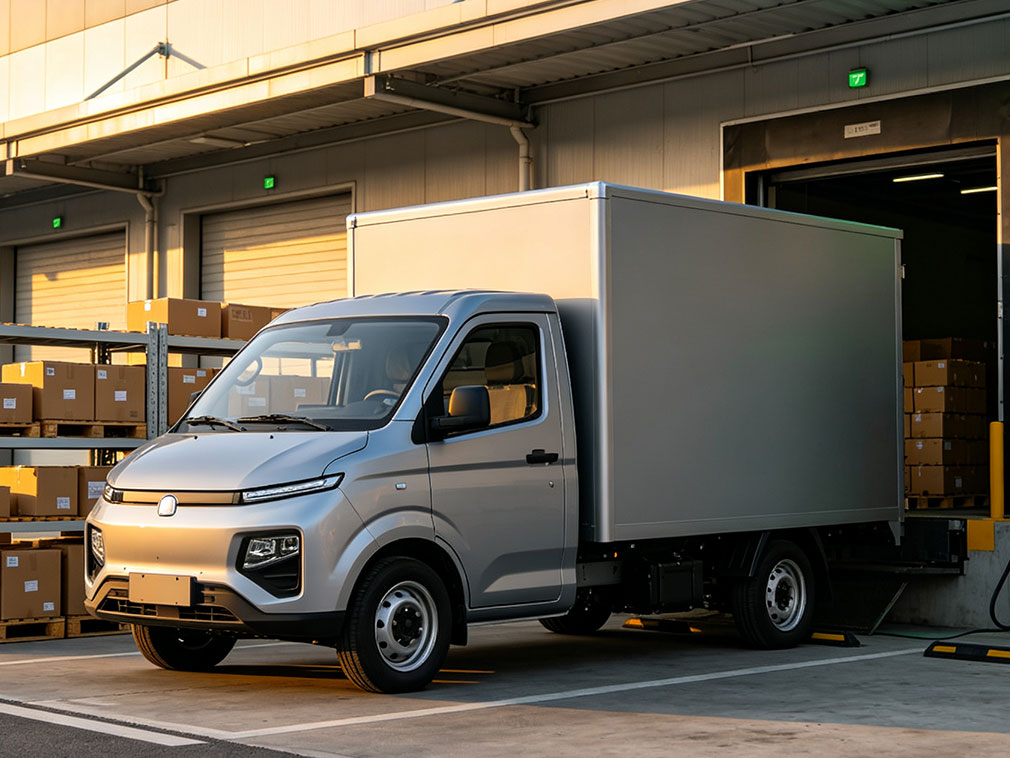
The purchase cost of new energy commercial vehicles is generally still higher than that of comparable gasoline vehicles, but their energy and maintenance expenses are significantly lower. With the continued decline in the price of power battery systems, the procurement price of lithium iron phosphate cells in 2025 was below 0.4 yuan per watt-hour, a decrease of about 30% compared to 2023, driving a narrowing of the price gap between the two vehicles. More and more niche scenarios are seeing a turning point where TCO is on par with or even surpasses that of diesel heavy trucks.
For example, in port transshipment scenarios with a daily mileage of around 200 kilometers, calculated over a five-year usage period, the TCO of battery-swapping heavy trucks can be about 8% to 12% lower than that of diesel heavy trucks; even in regional delivery scenarios with a daily mileage of over 400 kilometers, some pure electric models can achieve a TCO that is basically on par with diesel trucks by combining off-peak charging.
When making purchasing decisions, buyers must comprehensively consider energy costs, maintenance, tire wear, insurance, financial interest, and residual value, rather than just focusing on the base price of the vehicle.
Furthermore, the impact of battery degradation on residual value and the battery leasing and service fee models charged by different battery swapping service providers will also significantly influence the Total Cost of Ownership (TCO). It can be said that the judgment question of "whether to buy an electric vehicle" is rapidly transforming into a choice question of "in which scenario to use it first and which energy replenishment method is more cost-effective."
IV. Two Hurdles for Going Global: Certification and Localization
New energy commercial vehicles must overcome two hurdles to go global: certification and localization. Regarding certification, the EU WVTA whole vehicle type approval is a prerequisite for entering the European market, and it has systematic requirements for battery safety, electromagnetic compatibility, and pedestrian protection for electric commercial vehicles. The US DOT standard and EPA emission certification have high thresholds and complex testing requirements.
The Gulf GCC certification is similar to European standards in terms of vehicle strength, braking, and lighting. In addition, some countries in Southeast Asia and South America are also establishing their own access frameworks. The difference between left-hand drive and right-hand drive further increases the complexity of product adaptation. If companies cannot obtain the necessary certifications, their vehicles cannot be registered and licensed locally.
Regarding localization, to balance import tariffs on complete vehicles with investment policy requirements, CKD/SKD (Completely Knocked Down) assembly has become a common method. Countries like Thailand, Indonesia, and Malaysia offer tariff preferences for CKD/SKD imports, but require a certain percentage of local sourcing or assembly processes.
This places higher demands on supply chain management and quality control, and the certification body and responsibility division must be clearly defined in the contract. These two hurdles mean that the export of new energy commercial vehicles is no longer just about exporting individual products, but rather about exporting a comprehensive solution encompassing certification, services, and the supply chain. Companies with systematic capabilities are more likely to establish a foothold overseas, while relying solely on low-priced products and hoping for the best is accumulating risk.
V. Impact on Buyers
At the selection level, buyers need to focus on verifying whether the driving range and charging methods match the actual daily operating mileage, and investigate the actual coverage and expansion plans of local charging or battery swapping infrastructure to avoid vehicles becoming idle due to inconvenient charging after arrival. Cost assessment should not only consider the base vehicle price but also incorporate energy costs, maintenance, tires, and battery reuse or residual value into the Total Cost of Ownership (TCO) model, taking into account the vehicle's lifespan.
Regarding warranty coverage, it's crucial to clarify whether the warranty terms cover the three core electric systems (battery, motor, and electronic control system), the warranty period, and battery capacity degradation warranty standards.
The lifespan of spare parts supply, the density of the local service network, and response time must be confirmed to reduce uptime risks and downtime losses. For battery-swapping vehicles, the operational stability of the battery-swapping service provider, the lock-in period in the service agreement, and the fee adjustment mechanism must also be examined.
VI. Trend Outlook
Electrification in closed scenarios will mature first. The combination of autonomous driving and electrification in mining areas, ports, and industrial parks may further reduce costs. Long-haul trunk lines will gradually achieve breakthroughs with the increasing density of ultra-fast charging and battery-swapping networks. Megawatt-level charging (MCS) pilot projects have already begun, and in the future, recharging time is expected to be reduced to less than half an hour.
Battery swapping and fast charging will develop in parallel, and the coverage speed of the recharge network will directly determine the penetration pace of each regional market. Certification and localization capabilities will become the watershed between different supplier levels and the success or failure of overseas expansion.
The maturity of charging standards and infrastructure is increasingly becoming the primary prerequisite for different markets to accept new energy commercial vehicles, and regions with inconsistent standards will face a long transition period.






