
Michelin Accelerates Carbon Neutral Tire Production
Eight Companies, One Circular Economy Landscape
On May 27, 2026, French deep-tech startup Syntetica officially announced a collaboration with the Michelin Centre for Sustainable Materials. This company has developed a proprietary low-temperature chemical depolymerization process that can directly recycle nylon-rich blended textiles without pre-sorting, producing high-purity nylon 6 and nylon 66, applicable to the textile, automotive, and industrial sectors. Currently, the global textile recycling rate is less than 1%, and Syntetica's technology targets this critical gap.
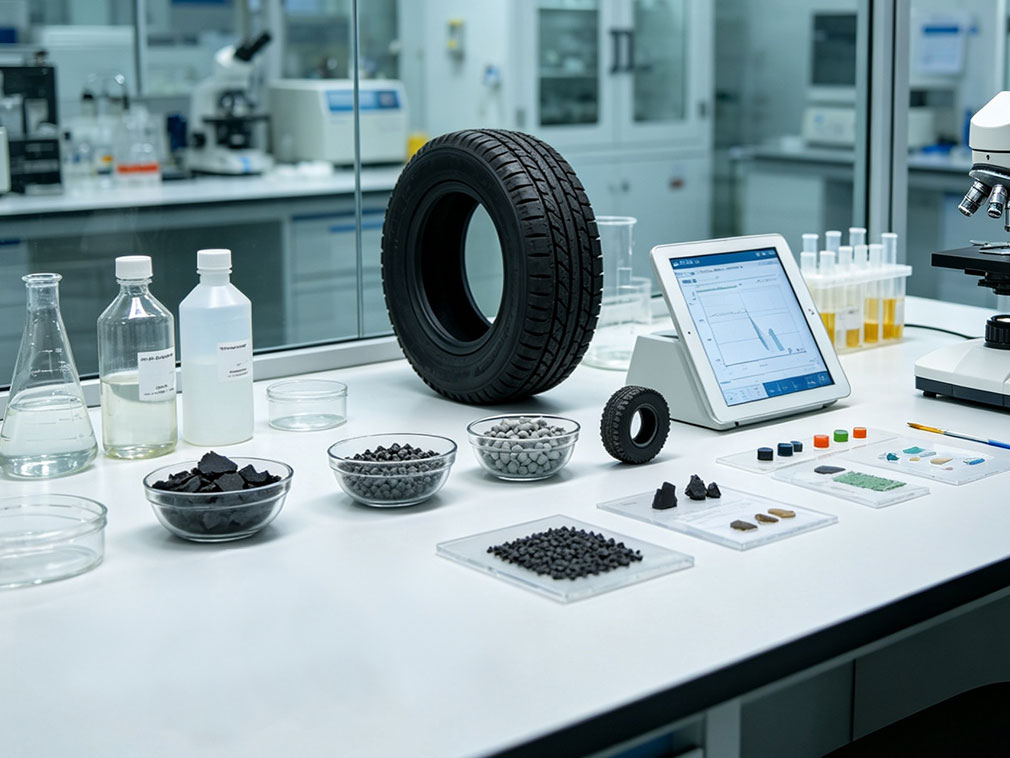
Syntetica is not an isolated case. According to the latest information released by Michelin in July 2026, the Centre for Sustainable Materials will have eight companies operating by the end of 2026, covering multiple sectors including plastic recycling, nylon recycling, waste heat power generation, bio-fermentation, and environmental assessment:
Carbios: A global pioneer in enzymatic plastic and textile recycling, the first company to join in 2021.
bobine: Chemical process electrification technology applied to plastic chemical recycling.
ResiCare: A Michelin subsidiary, developing high-performance, non-toxic adhesive resins.
Capillum: The world's first hair recycling and resource utilization industrial chain.
Numtech: Provider of environmental footprint assessment and emission reduction solutions.
Biotech Open Platform: A precision fermentation platform jointly created by Danone, DMC, Michelin, and others.
Entent: Low-temperature deep processing technology for converting industrial waste heat into electricity.
Syntetica: Nylon chemical recycling technology, joining in 2026.
5-HMF: A "Sleeping Giant" Awakened
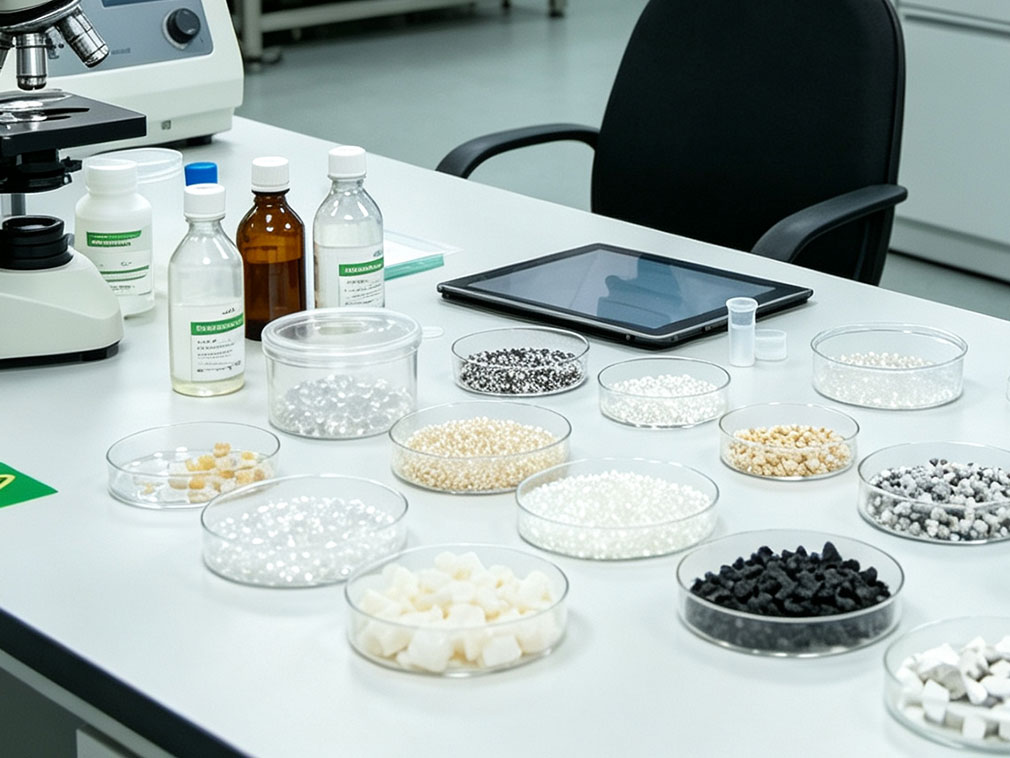
Among the eight companies that have joined, ResiCare is a Michelin "child." This company, incubated within Michelin in 2016, focuses on developing high-performance adhesive resins that are free of formaldehyde and resorcinol. One of its core breakthroughs is the 5-hydroxymethylfurfural (5-HMF) production process developed in cooperation with IFPEN (French Institute for Petroleum and New Energy)—a bio-based, non-toxic platform molecule extracted from fructose, hailed as a "sleeping giant," capable of replacing many petroleum-based raw materials.
In 2024, Michelin announced a €60 million investment to build the world's first industrial-scale 5-HMF production facility (3,000 tons per year) in Péage-de-Roussillon, France. The project, named CERISEA, was jointly funded by France's ADEME and the EU's CBE JU. The CERISEA project officially launched in April 2025, construction began in October of the same year, and it was expected to be operational in 2026, creating approximately 30 direct jobs. Michelin estimates that the European market potential for this molecule will exceed 40,000 tons by 2030.
"All Sustainable": From Slogan to KPIs
The expansion of the Sustainable Materials Center is a slice of Michelin's "All Sustainable" strategy. This strategy is not just rhetoric—it is broken down into 12 quantifiable performance indicators within the "Michelin in Motion 2030" plan, covering environmental, social, and financial dimensions.
In terms of environmental impact, Michelin has set two clear timelines:
2030 Milestones: 40% of all tires will use sustainable materials (bio-based or recycled); CO2 emissions from industrial sites will be reduced by 50% compared to 2010; carbon neutrality will be achieved in Scope 1 and Scope 2 (target year: 2050).
2050 Endgame: 100% of all tires will use sustainable materials; full carbon neutrality will be achieved across the entire business.
The Chinese market is positioned as a "pioneer" in this roadmap. Yves Chapot, Managing Director and Chief Financial Officer of the Michelin Group, stated at the France-China Business Climate Forum during the 2025 China International Import Expo that all Michelin tire plants in China will achieve carbon neutrality by 2030—20 years ahead of the Group's 2050 timeline. Specifically, the Shenyang plant aims for carbon neutrality by 2028, while the Shanghai plant targets 2030.
Currently, both plants have achieved 100% green electricity coverage, reducing emissions by approximately 180,000 tons annually. "Sustainable development is not only Michelin's guiding framework but also the core driving force for business innovation and collaboration," said Yifu Xia, revealing the strategic logic behind the Sustainable Materials Center: it's not a charitable project, but an open innovation model—using Michelin's industrial capabilities to facilitate technological breakthroughs in startups, ultimately benefiting the core tire business and new polymer composites businesses.
A Century-Old Factory's "Second Life"
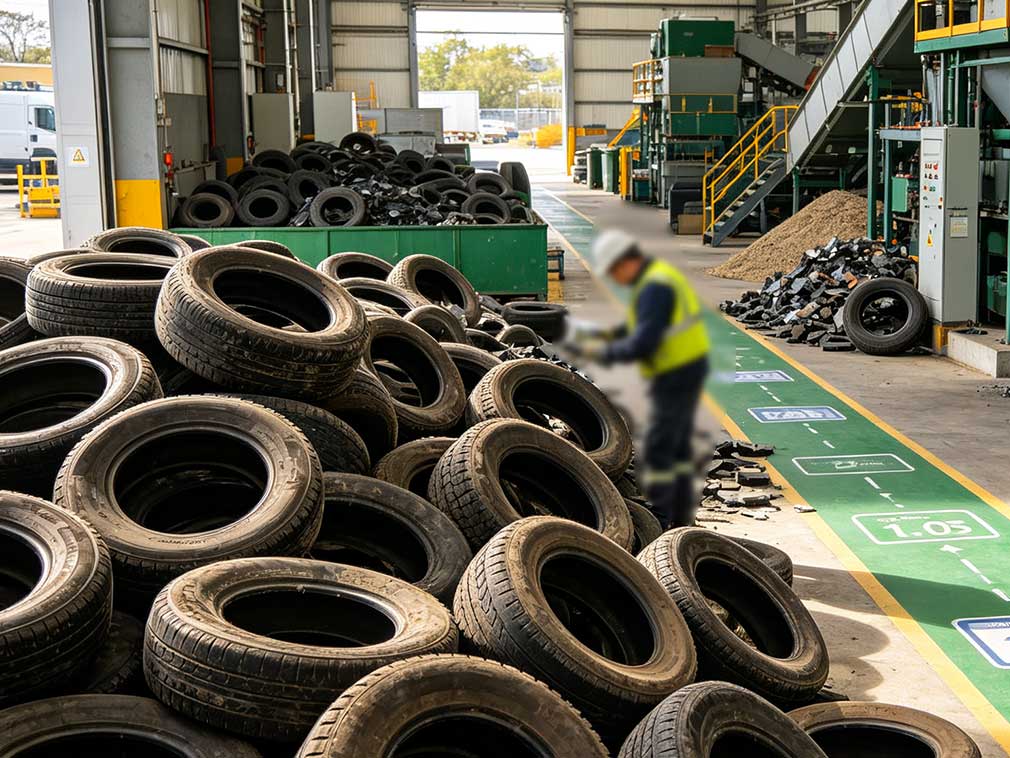
Looking at the bigger picture, the Cataroux Innovation Park, where the Sustainable Materials Center is located, is itself a "sustainable" story. This 42-hectare park was originally the site of Michelin's century-old factory. Its transformation began in 2021 with a total private investment of approximately €300 million, focusing on three main areas: talent training, sustainable materials research and development, and collaborative innovation.
The park includes four complementary centers: the Manufacturing Talent Academy (Michelin Corporate University, opened in 2022), the Sustainable Materials Center (CMD, operational since 2021, first phase completed in 2024), the Collaborative Innovation Center (PIC, opening in early 2026, providing over 2,400 workstations), and the future Pistes district (planned for 2028). It is projected that by 2030, the entire park will create approximately 1,000 new jobs and attract over 400,000 visitors annually.
From a tire factory to a circular economy incubator, Cataroux's transformation itself is the best illustration of Michelin's "Sustainability for All" vision. The eight companies within the Sustainable Materials Center represent the most tangible facet of this transformation—each company embodies a circular technology path, and each path could potentially become a link in the future supply chain of tire materials or polymer composites.






