
How China's Tire Markets Really Differ
Selling a single tire to 34 provinces in China is a completely different business in each province.
Shandong produced 510 million tires last year, with exports reaching 91.7 billion yuan, accounting for 56.91% of the national tire exports. One in every three tires sold globally comes from a factory in Shandong. But what's truly interesting isn't the production volume, but rather how the same tire, when moved from a Beijing auto repair shop to a highway in Lhasa, attracts entirely different customers.
In the national replacement tire market, the best-selling brands are Zhongce and Linglong—relying on solid distribution channels and competitive pricing, they sell nearly 20 million tires annually. However, if you enter a tire shop in Beijing, the salesperson's first question is, "Do you have the Michelin Quiet tire in stock?" or "Have you received the Continental self-sealing tire?" No one talks about prices; they talk about how to shorten braking distance on wet roads by one meter or reduce tire noise by two decibels on the highway.
Beijing and Shanghai don't even rank among the top five cities in terms of total vehicle numbers; Beijing has approximately 2.5 million vehicles, and Shanghai around 2.6 million, far fewer than Chengdu and Chongqing's 6 million+. However, in these two cities, one in every five cars sold is a luxury brand.
In Shanghai, new energy vehicles already account for 45% of the total car fleet, while in Beijing, the success rate for obtaining a license plate for a gasoline-powered car is less than 0.3%—a new car that can get a Beijing license plate starts from a completely different point. A tire shop owner in Shanghai's Minhang District, who has been in the tire business for thirteen years, told me, "If you recommend a domestic tire that's 200 yuan cheaper to a customer here, their first reaction isn't happiness, but rather asking if you're responsible for the increased braking distance of two meters."
Zhejiang is another story altogether. In 2025, the average transaction price per car in Zhejiang was 215,000 yuan, the highest in the country. Luxury cars accounted for 20%, meaning one in five cars cost over 300,000 yuan. But car owners in Zhejiang are different from those in Beijing and Shanghai—tire shops in Hangzhou, Ningbo, and Wenzhou aren't in the business of "waiting until they're worn out to replace them," but rather an upgrade business.
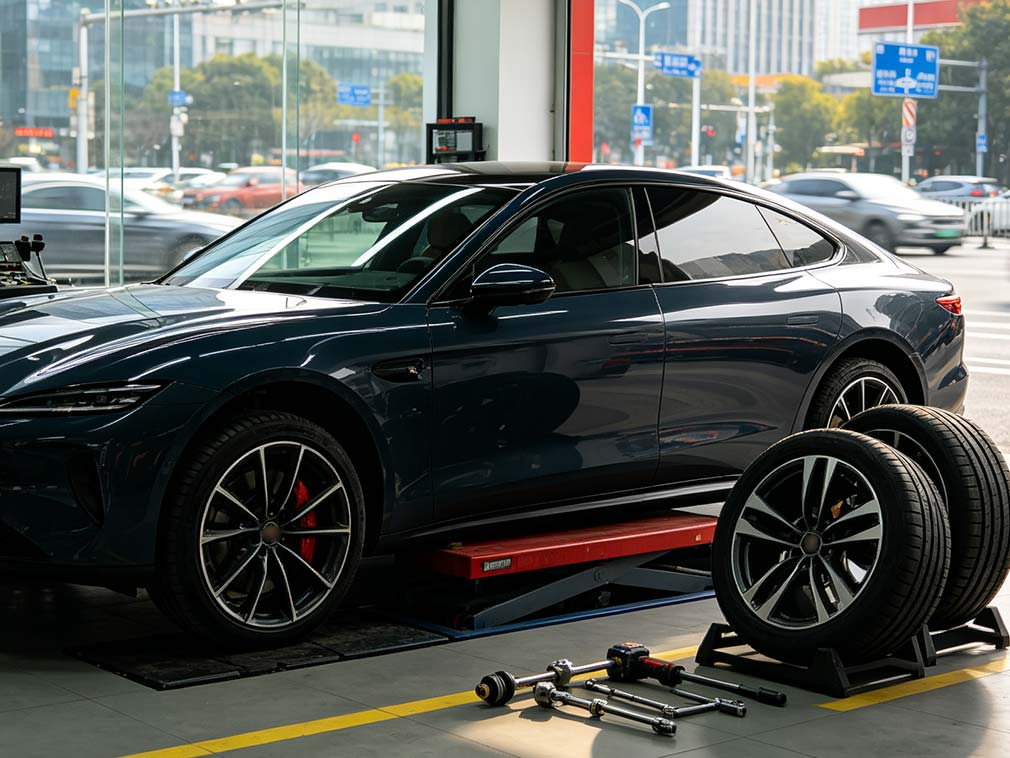
They'll drive the original tires for 20,000 kilometers, then immediately replace them with quieter tires and get a four-wheel alignment done. These car owners don't blindly worship foreign brands; they buy domestic tires with acceptable specifications and license plates. Sailun's "Liquid Gold" series consistently sells hundreds of tires a month at several authorized dealerships in Ningbo.
Guangdong and Jiangsu are much more pragmatic. Guangdong has 16.7899 million vehicles, and Jiangsu has 14.0192 million, ranking second and third nationally respectively, representing a solid market base. However, car owners in these two regions are savvy shoppers. The best-selling tires in Guangdong are 205/55R16 and 215/55R17—standard passenger car tires, inexpensive and sufficient.
In southern Jiangsu, the penetration rate of new energy vehicles exceeds 45%, and low rolling resistance, quiet tires are becoming popular. It's not about speeding, but about maximizing range per kilowatt-hour. Data from Tuhu and JD Auto Service shows that Guangdong and Jiangsu consistently rank first and second in online order volume. Choosing a model, comparing prices, placing an order, and scheduling installation at a dealership—the process is seamless.
Hainan is a market that is easily overestimated. With the highest per capita vehicle ownership in the country and a 66.5% new energy vehicle penetration rate, the numbers certainly look good. After the border closure in December 2025, the topic of zero-tariff imported cars has trended on social media several times. However, the border closure policy targets commercial vehicles and has little to do with individual car purchases and tire replacements.
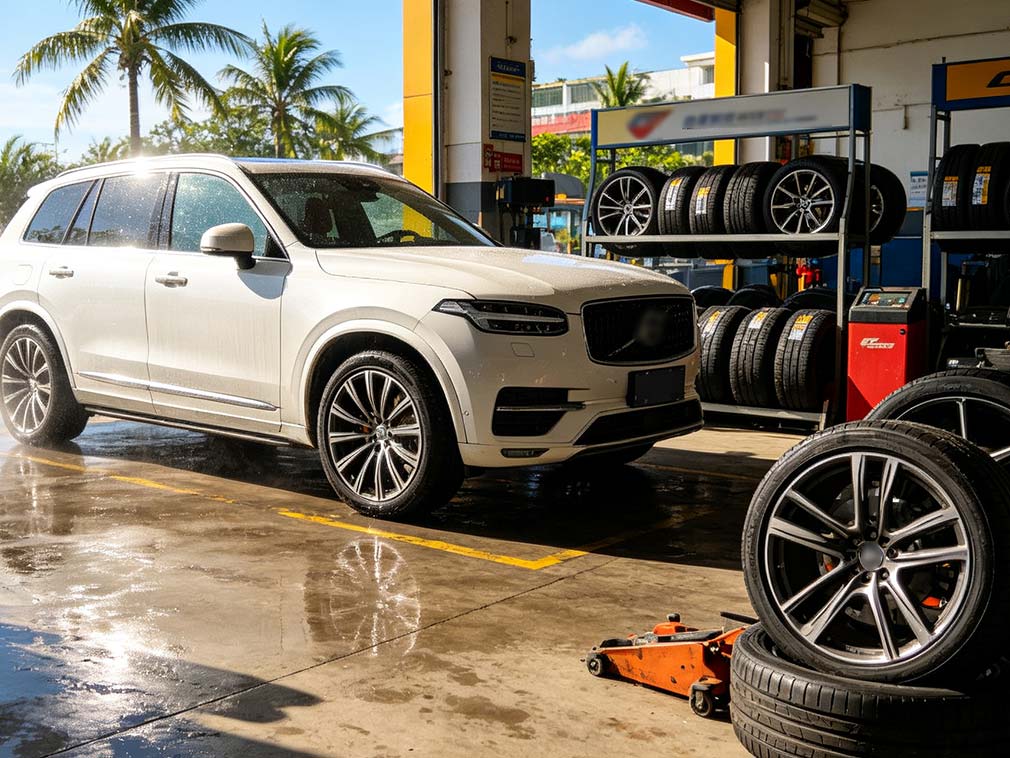
The real factor affecting tire consumption in Hainan is the weather—high temperatures, high humidity, and strong ultraviolet radiation cause rubber to age much faster than inland areas. Therefore, weather-resistant and anti-aging products sell well here; this is a necessity, not a sign of consumption upgrading. As for the claim that "Hainan's high-end tire consumption is approaching that of Beijing and Shanghai," there is currently no publicly available data to prove this, given the more than double the GDP per capita.
The western market represents another extreme. Off-road vehicles account for half of the total number of cars in Tibet, the highest in the country. Along the national highway from Nagqu to Ali, gas stations are only one every 200 kilometers or so, and it's standard practice for locals to have their trunks constantly crammed with fuel cans and spare tires.
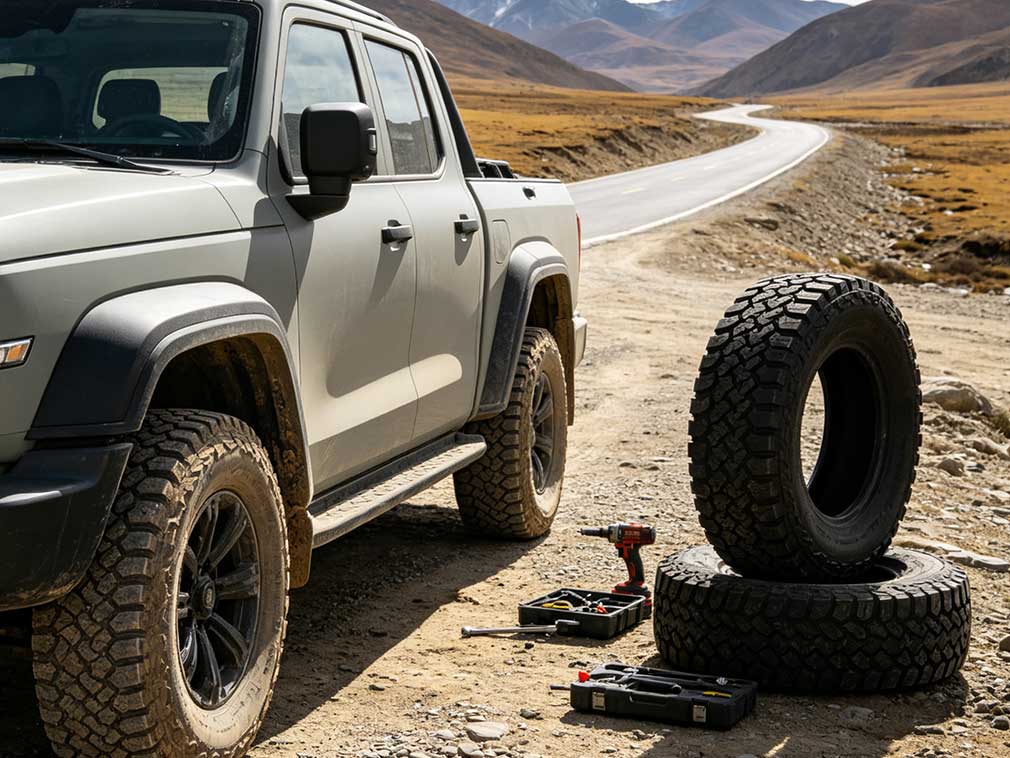
The five provinces of Sichuan, Tibet, Qinghai, Xinjiang, and Yunnan combined contribute 46% of the country's new off-road vehicle registrations, with over 300,000 new vehicles added annually. All-terrain (AT) and manual (MT) tires are not optional in these areas; they are necessities. Great Wall's Tank 300 sold 76,000 units last year, with nearly 10,000 going to Xinjiang, Inner Mongolia, Tibet, Qinghai, and Gansu. Consumers there don't have such complicated preferences; bad roads require sturdy vehicles, and sturdy vehicles depend on durable tires.
Chongqing is different. The roads in this mountainous city aren't bad, but they are steep, winding, and involve frequent hill starts. SUVs account for over 40% of the market, and drivers there have much higher demands for grip and braking than in flat cities. While the claim that "more than half of car owners choose reinforced tires" lacks statistical support, the underlying demand logic is sound.
The origin logic is also interesting. Shandong has 17.3635 million vehicles, ranking first in the country. Linglong, Sailun, Triangle, and Double Star have established an impenetrable distribution network in their home turf, from rural repair shops to chain maintenance stores—Shandong brands basically dominate.
Hebei is doing tire business on a different level. It's home to seven national logistics hubs, ranks third nationally in railway mileage, and accounts for 67.3% of the express delivery volume in the Beijing-Tianjin-Hebei region. In Hebei, private car tires are secondary; all-steel radial tires—specifically truck and bus tires—are the most widely circulated category. A heavy truck typically has twelve tires, and the sheer number of trucks on Hebei's roads defines the market's fundamental characteristics.
Guangxi follows a much more basic logic. Of its approximately 4.5 million vehicles, the Wuling Hongguang MINI EV accounts for about 60% in rural towns. A 200-yuan economy tire typically lasts 30,000 to 40,000 kilometers in county towns before needing replacement—that's common. Consumers want two things: it doesn't break, and it's not expensive.






