
Are Run-Flat Tires Worth It?
Run-flat tires (commonly known as "air-proof tires") are perhaps the most misunderstood product in the automotive aftermarket. Their "S-shaped growth curve"—from military technology to luxury standard equipment, and now facing repositioning—reflects not only the evolution of tire technology but also the ongoing struggle within the automotive industry between safety, comfort, and cost.
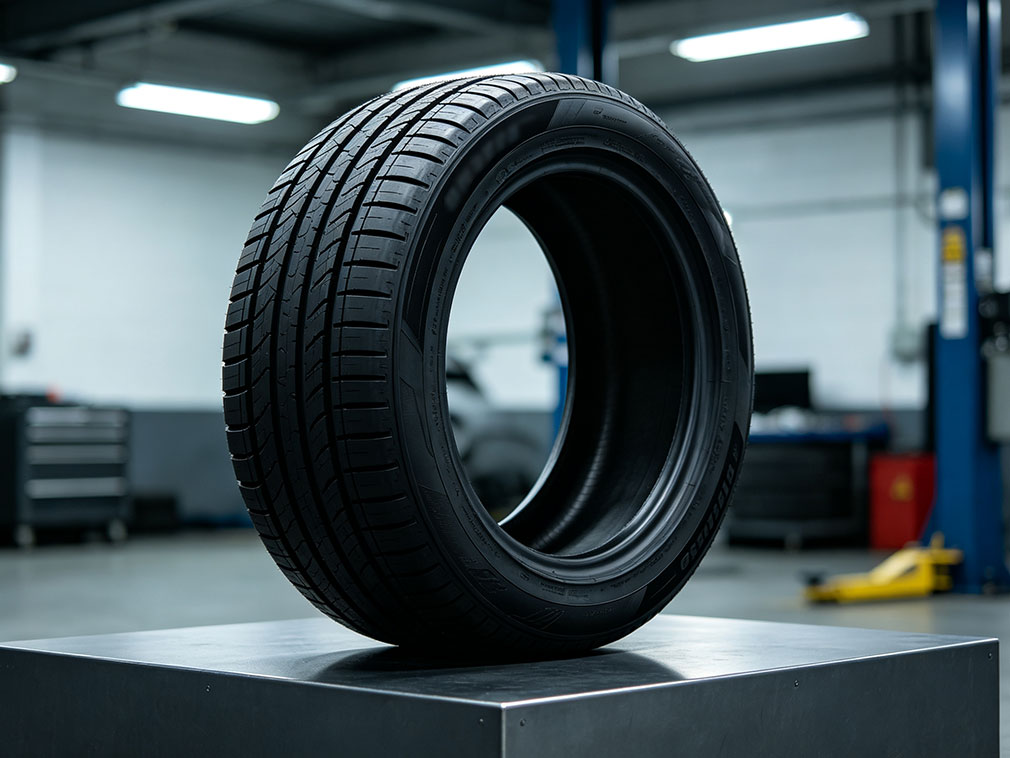
However, the structure of growth is changing: the OEM market is experiencing slower growth, with some automakers (such as BMW) choosing to switch to conventional tires in newer models; but demand in the aftermarket replacement market and for special vehicles (military, bulletproof, and commercial) continues to expand. The industry is shifting from a single-driven model of "luxury brand standard equipment" to a more diversified distribution of application scenarios.
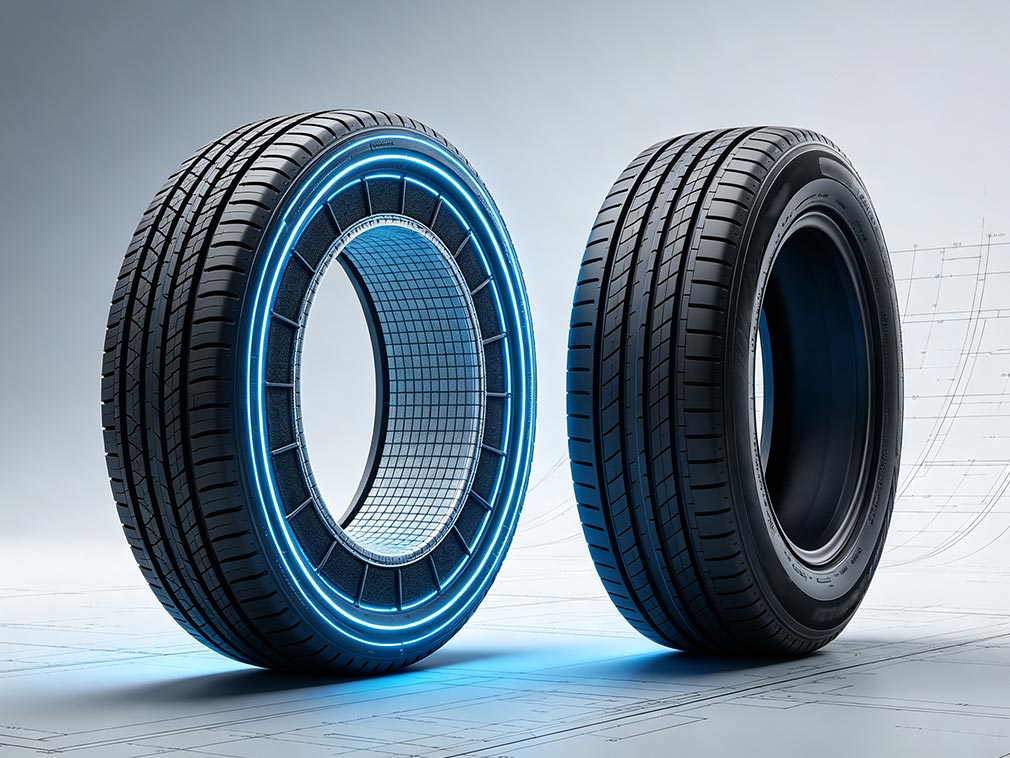
BMW's strategic shift: not "abandoning," but "re-selecting"
BMW's gradual reduction of the proportion of run-flat tires used in OEM production is one of the most noteworthy changes in recent years. Starting with the seventh-generation 7 Series, the new 5 Series (2024/2025 models), the new X1, and the new X3 have gradually switched to standard tires, supplemented by digital tire pressure monitoring systems and onboard tire repair kits.
This is not, as some commentators have suggested, that "run-flat tires aren't actually run-flat, causing BMW to lose customers." The real reasons are multifaceted:
First, comfort takes precedence. Run-flat tires, with their thicker sidewalls, add 20%-40% extra weight, resulting in a harder road feel and noticeable tire noise. For the 5 Series and 7 Series, whose core selling points are luxury and comfort, this is an increasingly unacceptable trade-off.
Second, the pressure of electrification. BMW's i series and hybrid models place higher demands on tire rolling resistance, lightweight design, and quietness. The weight of run-flat tires inherently conflicts with the efficiency goals of electric platforms.
Third, mature technological alternatives have emerged. The combination of digital tire pressure monitoring, remote diagnostics, and tire repair kits can now replace run-flat tires for "emergency driving" in most scenarios, while avoiding the high replacement costs of run-flat tires.
Fourth, cost pressure. A run-flat tire retails for 300 to 1000 yuan more than a regular tire of the same size, and has a shorter replacement cycle, putting pressure on both consumers and automakers' TCO (Total Cost of Ownership).
However, it's worth noting that BMW hasn't completely rejected run-flat tires—its M-series performance cars and some high-end SUVs still retain the option. This is a strategy of "differentiated selection based on vehicle configuration," rather than a simple "abandonment."
Five Truths Consumers Care About
1. Is a nail puncture a sign of total damage? Not entirely.
Tires with nail punctures in the tread, with a puncture no larger than 4.2-6mm, and not driven for a long distance with zero tire pressure, can be repaired normally using a mushroom plug repair method. The real cause of a tire failure is usually not a nail puncture itself, but rather the driver unknowingly driving with zero tire pressure for an extended period, causing damage to the inner cord layer of the tire sidewall by the wheel rim – this is precisely why run-flat tires must be used in conjunction with a Tire Pressure Monitoring System (TPMS).
2. Are repairs really more expensive?
Yes. Due to the thicker and stiffer sidewalls, tire removal is more difficult, requiring specialized equipment, and labor and repair costs are typically 30%-50% higher than for regular tires. However, not all tire shops are unable to handle this – simply choose a qualified professional shop.
3. Run-flat tires = no need for a spare tire?
This is the core practical value of run-flat tires. An 80km range after a tire loss is enough to drive from the highway to the nearest repair shop, avoiding the need to stop and change tires on dangerous roads. For users who frequently drive on highways or long distances, this feature still has irreplaceable safety significance.
4. Is the noise and comfort really that much worse?
Compared to regular tires of the same size, run-flat tires are indeed noisier and have a stiffer road feel. The new generation of tires has improved through tread pattern optimization and rubber compound improvements, but it still lags behind high-end quiet and comfortable tires (such as the Michelin Primacy series). This difference may be unsatisfactory for daily urban commuters, but it's an acceptable compromise for users who prioritize safety and redundancy.
5. Have tire blowout accidents really decreased?
No. Data from the Traffic Management Bureau of the Ministry of Public Security shows that in 2024, tire failure accounted for 18.7% of traffic accidents nationwide, rising to 46% on highways. The fatality rate due to tire blowouts is 3.2 times that of ordinary accidents. Tire safety issues are far from resolved, and the market demand for run-flat tires remains solid.
The name "run-flat tire" itself is misleading—it creates the illusion of invulnerability. When consumers discover that they can still blow out, get punctured, and require paid repairs, the disappointment translates into distrust. This is both a problem of consumer perception and a backlash from the industry's marketing strategies.
The 90-year evolution of run-flat tires tells us that they have never been a perfect solution, but rather an engineering trade-off under specific constraints—trading comfort and cost for extra safety redundancy and emergency capability.
In the wave of electrification and intelligentization, run-flat tires will not disappear, but their role is being redefined. They may no longer be a standard feature of luxury brands, but they will continue to play an irreplaceable role in scenarios with extreme safety requirements (high-speed long-distance driving, military use, bulletproofing, special transport). For ordinary urban commuters, a set of high-quality regular tires paired with a tire pressure monitoring system may be a more pragmatic choice.
Finally, there is no standard answer to tire selection—only the one best suited to your driving scenario.






