
Agriculture Tires Boost Modern Farm Efficiency
Powering the Next Era of Agriculture: Full-Series Radial Tires Engineered for Productivity, Soil Health, and Real-World Performance
China’s agricultural production model is undergoing a fundamental transformation. Small-scale, labor-intensive farming is rapidly giving way to large-scale contiguous planting, full-process mechanization, and precision green cultivation. Modern agriculture has entered a critical phase where technology enables both higher efficiency and better quality.
The industry’s value criteria are more pragmatic and multidimensional than ever: success is no longer measured by output volume alone, but by a balance of productivity gains, total cost control, and arable land conservation. This shift is driving structural change across the entire agricultural machinery and component supply chain, and agricultural tires are at the center of that change.
Based on publicly available industry data for the first half of 2026, China’s agricultural machinery market is showing clear signs of a bottoming-out recovery. The development logic has decisively moved away from scale expansion toward a high-quality path defined by performance upgrades, technology iteration, and genuine environmental compatibility.
A recovering market with sharp structural differentiation
The recovery trend is solid, but it is highly differentiated. According to national agricultural machinery purchase subsidy statistics, cumulative subsidized sales volume reached 1.2486 million units as of June 12, 2026, corresponding to a market sales value of RMB 24.135 billion. Overall market sentiment is steadily repairing.
The AMI (Agricultural Machinery Market Index) published by the China Agricultural Machinery Distribution Association recorded both month-on-month and year-on-year improvement in June 2026. Except for a short-term fluctuation in February, most months this year performed better than the same period last year, confirming a sustained rebound.
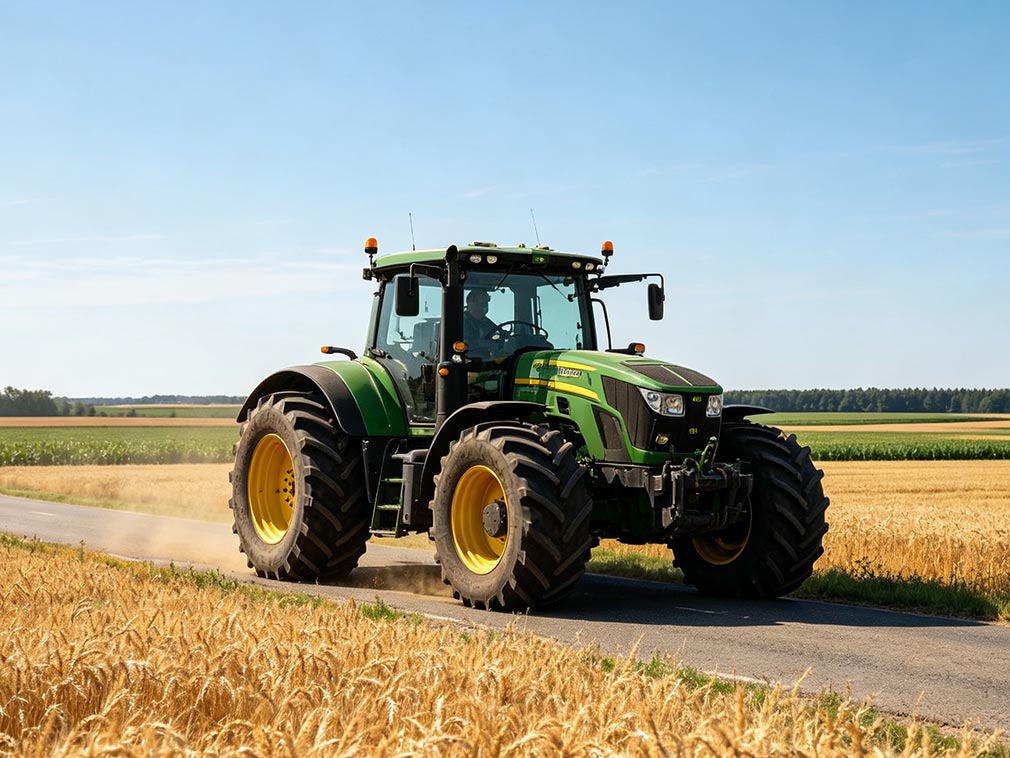
Large, high-efficiency machines are the primary growth engines. In the first half of the year, subsidized sales of wheeled tractors reached 124,500 units, with resources continuing to concentrate among leading manufacturers. Meanwhile, demand for low-end, small-scale equipment is shrinking significantly. End users are showing a strong and persistent preference for intelligent, larger, high-stability machinery — a shift that places much stricter performance requirements on the tires that keep these machines productive in the field.
The tire market is redefining itself: radial, specialized, and green
As the machinery evolves, the structure of the agricultural tire market is optimizing at an accelerated pace. The transition toward radial, application-specific, and environmentally considerate products is irreversible. For decades, conventional bias-ply tires have dominated, but their shortcomings — poor ground pressure distribution, low wear resistance, and tendency to cause soil compaction — make them increasingly incapable of meeting the demands of today’s intensive, large-scale field operations. Their market share continues to decline.
Industry analysis shows that the penetration rate of agricultural radial tires is climbing steadily in 2026 and is expected to reach 72.1% for the full year, making radials the mainstream choice. More importantly, purchase criteria have undergone a substantive change.
End users no longer evaluate tires based on upfront price alone. They are looking at total lifecycle value: service life, energy consumption during operation, and, critically, the tire’s effect on the land. In the first half of 2026, specialized agricultural tires offering low ground pressure, high tear resistance, anti-skid and anti-sink performance, and adaptability to complex field conditions recorded steady year-on-year sales growth. Demand for scenario-specific, customized products is increasing, with large-scale farming operations and cooperatives showing the strongest willingness to invest in high-quality solutions.
Our response: a full-series radial tire system built for real farming landscapes
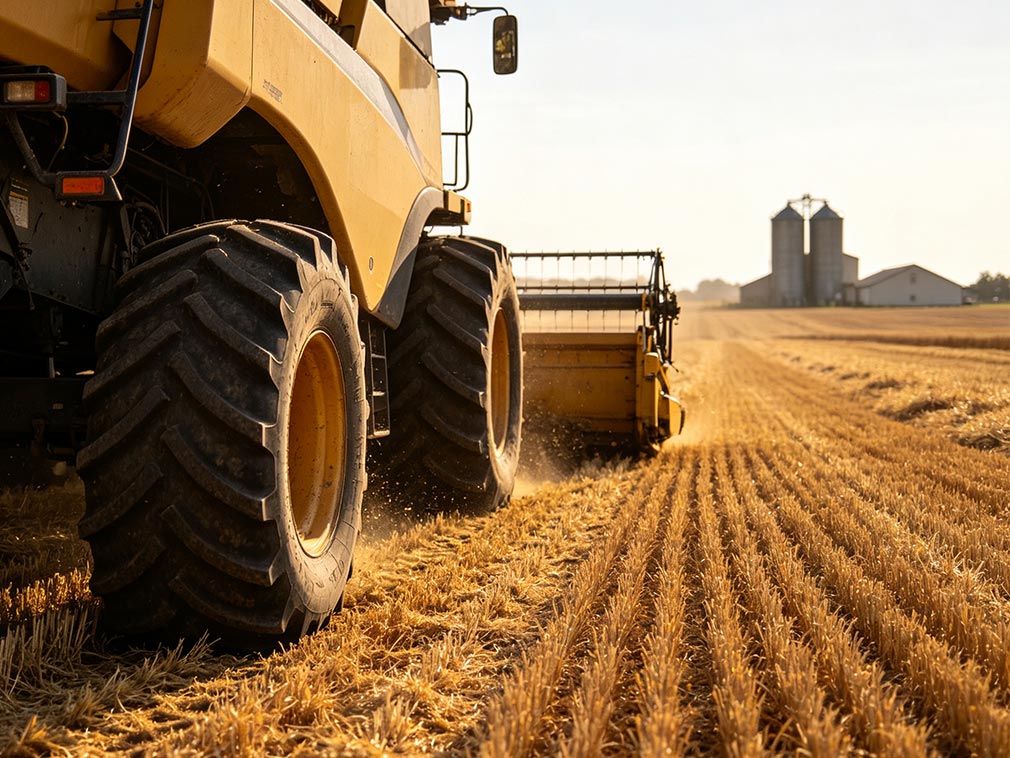
Rooted in the practical needs of modern agriculture and supported by a national-level technology R&D platform and global industry insight, we have built a comprehensive series of agricultural radial tires designed for multiple regions, diverse scenarios, and a wide range of machinery types. Our product portfolio covers differentiated operational environments: deep tillage in the black soils of Northeast China, high-wear dryland operations in the Northwest, anti-sink performance in southern paddy fields, and complex terrain work in hilly and mountainous areas.
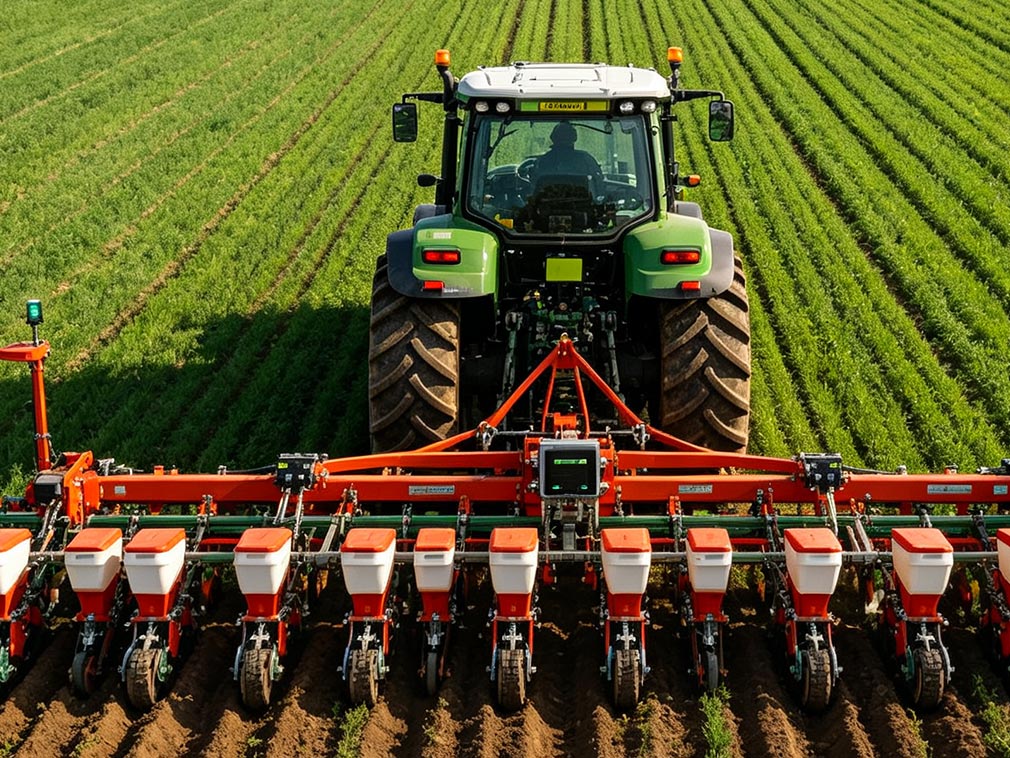
We serve the full agricultural cycle — seeding, crop protection, harvesting, and on-field transport — with a multi-specification, high-performance lineup that adapts to large and medium tractors, combine harvesters, intelligent crop protection machines, and other modern agricultural equipment. This enables us to meet the demands of both OE fitment and replacement in the existing equipment fleet.
Performance advantages grounded in technology and process optimization
Our products’ advantages come from persistent technical refinement. We have optimized proprietary rubber compounds, redesigned carcass structures for higher load capacity, and developed field-specific tread patterns that directly address the real problems operators face: field slippage, excessive energy consumption, rapid wear, and severe soil compaction.
The optimized footprint structure distributes working pressure more evenly, substantially reducing soil compression in the topsoil layer, mitigating compaction, and contributing to the sustainable use of arable land. At the same time, upgraded materials and processes significantly improve resistance to wear, aging, and tearing, extending service life and lowering equipment maintenance and component replacement costs for farmers and farming enterprises. The result is measurably better operational stability and field efficiency.
Development is driven by field data, not just laboratory theory
We deliberately avoid a purely theoretical R&D approach. Instead, we use real-world field data to guide every technical iteration. We have established permanent test bases across China’s core agricultural regions, conducting long-term, on-site trials under different climate conditions, soil types, and operational intensities. We systematically collect data on fuel and energy consumption, wear rates, and plot adaptability. Those real-world findings are then used to continuously optimize product parameters and performance.
Moving forward, we will continue to invest in agricultural support technology, advance product innovation, and refine our full-scenario agricultural tire solutions. Our commitment is to help agricultural production reduce costs, improve quality, increase efficiency, and protect the soil — empowering the ongoing modernization of agriculture and the high-quality development of rural industries.
We welcome collaboration with global equipment manufacturers, distributors, and farming enterprises seeking tire solutions engineered for the realities of tomorrow’s farming.






