
Ignore Brand Check These Three Indexes
When choosing tires, don't just focus on the brand and production date; these three indices are key to safety
Many people go to tire shops to change their tires and are often misled by various claims—either believing that big brands are always better, or insisting on buying only brand-new tires. In reality, what truly determines a tire's safety, durability, and ability to withstand your daily driving is that seemingly insignificant string of numbers and letters on the tire sidewall: Load Index, Speed Rating, and Wear Rating. Brand and storage time are secondary.
Below, we'll explain the ins and outs of these three core indices so you don't waste money when changing tires, and more importantly, avoid creating potential safety hazards.
I. Load Index: Not Just Enough, It Can Save Lives in Critical Moments
In tire specifications, such as "245/45 R19 101 Y," the number "101" is the Load Index. It represents the maximum weight a single tire can withstand at standard tire pressure. Converted, 101 corresponds to 825 kg, 98 to 750 kg, and 94 to 670 kg. Tires of the same size, even with just a few levels difference in load index, can result in a difference of 200-300 kilograms in the total load capacity of the four tires.
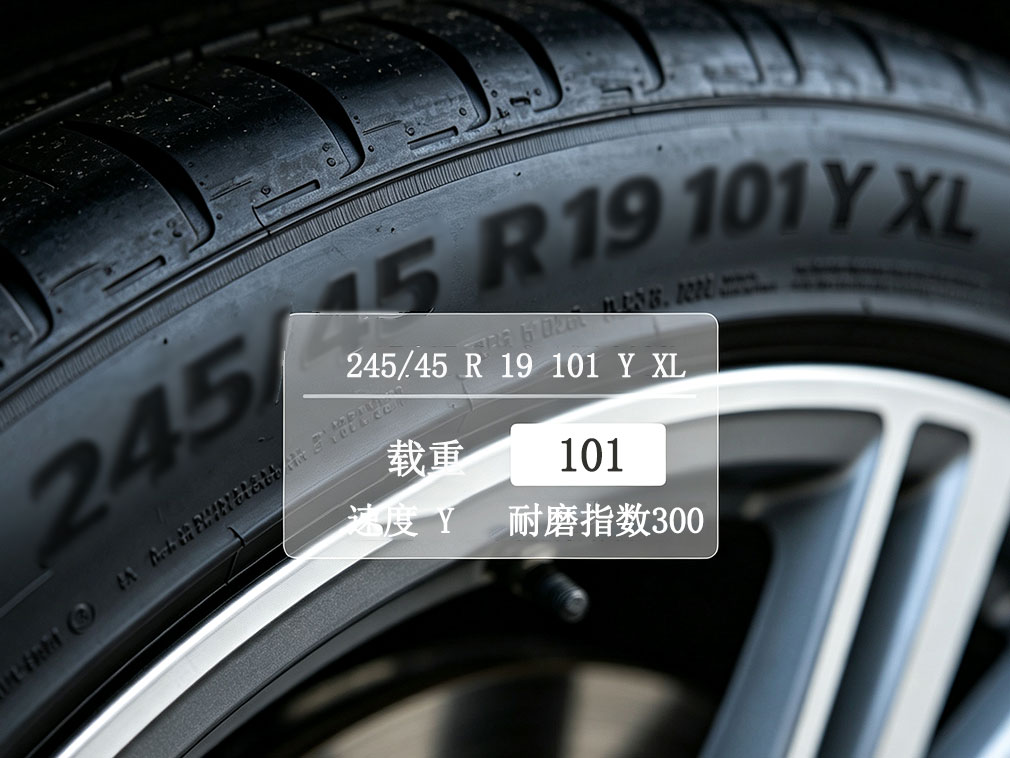
Many people think that as long as they don't haul heavy loads, the load index doesn't matter. However, there's an overlooked condition: sudden braking. A sudden hard stop causes the front of the vehicle to drop, and the front wheels may instantly bear 70% or even more of the vehicle's load. Manufacturers typically design tires with sufficient safety margin, ensuring the combined load capacity of the two front tires is close to the vehicle's full load weight, precisely to prevent this kind of instantaneous overload.
If the installed tires have a lower load index than the original manufacturer's rating, it might be fine for normal driving, but under full load and sudden braking, the tire sidewalls will deform excessively, heat will accumulate, and the risk of a blowout will increase dramatically.
Owners of new energy vehicles should be especially careful. Electric vehicles of the same class are generally 300-400 kilograms heavier than gasoline vehicles, and the original tires often have a higher load index. If you downgrade the tires to save money, you will not only fail the annual vehicle inspection, but also significantly reduce safety at high speeds.
For those who frequently drive fully loaded or on highways, upgrading the load index by one level from the original factory rating provides better sidewall support and a lower probability of bulges—a very practical upgrade.
II. Speed Rating: Not Just for Highway Driving, But Also for Wet Braking and Cornering
The speed rating is indicated by the letter following the load index, such as "Y," "W," "V," or "H." The later the letter, the higher the maximum sustained speed the tire can withstand. H corresponds to 210 km/h, V to 240 km/h, W to 270 km/h, and Y to 300 km/h.
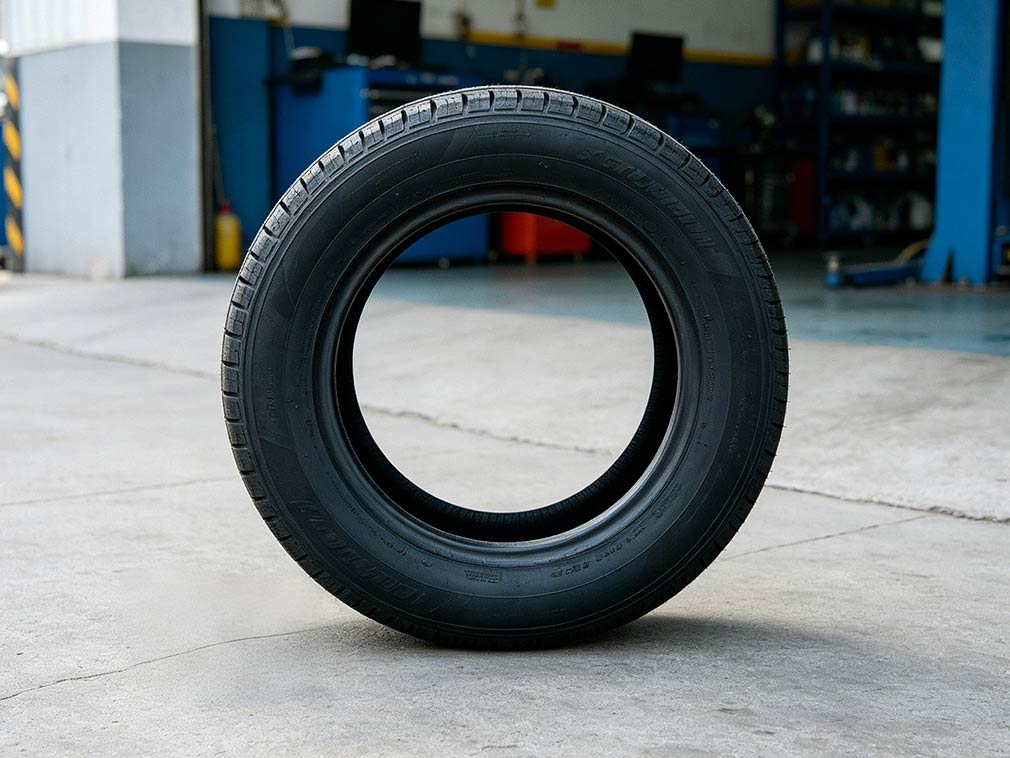
Many people think that with a 120 km/h speed limit on Chinese highways, an H rating is more than enough, so why pursue a higher speed rating? This thinking ignores the technological differences behind the speed rating. High-speed tires, to control deformation and heat buildup at sustained high speeds, have reinforced shoulders, optimized tread patterns for heat dissipation, and use rubber compounds with better high-temperature resistance. The direct benefits of these enhancements go beyond simply allowing you to reach speeds above 200 km/h; they manifest in almost every emergency situation you'll encounter daily.
For the same car, using higher-speed tires often results in significantly shorter wet braking distances; better lateral support and more stable vehicle posture during high-speed maneuvers or ramp turns, preventing the tire sidewalls from suddenly feeling "soft." Even if you only drive at 80 km/h on city highways daily, in summer, with road surface temperatures reaching 50-60 degrees Celsius, frequent starts and stops, and continuous driving will still raise tire temperatures.
At high temperatures, lower-speed tires are more prone to grip degradation, while higher-speed tires are much more resistant to this degradation. For cars that frequently travel on highways or in rainy southern regions, at least a V-rated tire is recommended; for purely city driving, an H-rated tire is sufficient, but avoid anything lower.
III. Wear Rating: Higher isn't always better; choose based on your mileage and grip needs
The number following "TREADWEAR" on the tire sidewall indicates its wear rating. It's a relative ratio of the mileage required for a tire to wear down to a certain extent under standard testing conditions. For everyday all-season tires, this number is typically between 240 and 400; the higher the number, the slower the wear, theoretically.
Many people pursue the highest possible tread depth, hoping to run a single tire for 70,000 to 80,000 kilometers. However, wear resistance and grip are inherently contradictory: high-tread-resistance compounds are often harder, reducing grip limits; low-tread-resistance tires offer strong grip but will have significantly fewer kilometers on a single tire. Some sports tires have a tread depth of less than 200, and semi-slick tires used in supercars even have a tread depth of only 50 or 60, sacrificing durability for superior grip on wet roads and in corners.
How to choose? It depends on your annual mileage and driving environment. If you drive over 20,000 kilometers per year, mostly on open ring roads or highway cruising, choose tires with a tread depth of 350 or higher; this will reduce the frequency of replacements and improve fuel economy. In rainy areas and for frequent nighttime highway driving, a balanced model between 280 and 320 is recommended, balancing braking performance on wet roads with a certain lifespan.
If you enjoy mountain driving and prioritize handling, you can appropriately lower the tread resistance index and switch to a softer compound, which will significantly boost your confidence in corners. Note that the tread resistance index is only relatively accurate for comparisons within the same brand; when comparing across brands, you cannot directly compare absolute values. You must also consider the traction index and temperature index.
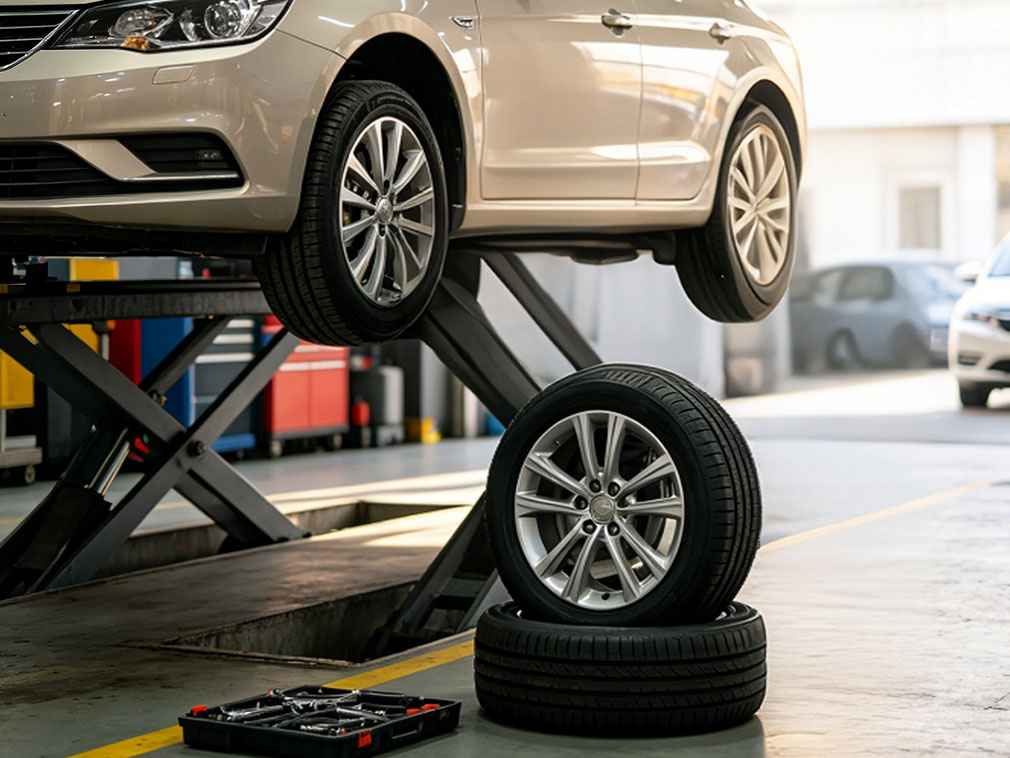
IV. Examples of Balanced Parameters
Understanding the above three points, and considering your actual needs and budget, choosing tires will no longer be confusing. The following are some common choices with reasonable parameter settings:
Michelin Resilience Series: Positioned for family use, with a tread resistance index around 400, it offers balanced braking power in both dry and wet conditions, and moderate sidewall support. Its low rolling resistance design helps with fuel consumption in gasoline vehicles and energy consumption in electric vehicles, making it suitable for daily commuting in compact sedans and some urban SUVs. It's not performance-oriented, but rather strikes a good balance between safety, durability, and comfort.
Chaoyang RP76+: Used in many domestic brand gasoline and new energy vehicles. The wear resistance index can be rated up to approximately 450, and the load index is generally 94-98. These tires are reinforced for the weight of electric vehicles, and also offer good noise reduction and water drainage. For family cars with high annual mileage and a focus on cost-effectiveness, this is a practical option; you won't feel bad about damaging them even after high mileage.
These two examples are just for reference. The key is to use the load index and speed rating marked on the original factory sidewall as a minimum standard, and then combine this with your own driving environment to decide on the trade-offs for the wear resistance index. This will allow you to filter out several models suitable for your actual driving needs.
V. Several Essential Practical Principles
Specifications must be consistent with the original factory specifications. Tire width, aspect ratio, and rim diameter should be based on the label on the driver's side B-pillar; do not change them yourself. Upgrading or downgrading requires professional calculations; otherwise, problems may occur with the speedometer, ABS, and chassis interference.
Tires on the same axle must be of the same brand, tread pattern, and specification, and the difference in tread depth between the left and right tires should not be too large (ideally no more than 2 mm). For four-wheel drive vehicles, it's best to replace all four tires at once to protect the transfer case.
Don't worry too much about the manufacturing date. Tires stored for six months to a year have the most stable rubber performance. As long as they are no more than three years old and stored properly (away from light, dry), they are perfectly safe to use. Don't fall for the shop's tricks by chasing "current month tires."
Consider the regional climate: If there is a lot of snow and ice in the north during winter, prepare a set of snow tires. In this case, the tread wear index and speed rating can be compromised; ice and snow grip is the top priority.
Before changing tires, take pictures of the key figures on the sidewall of the original tires. Then, use the load index and speed rating as hard thresholds to select the appropriate tread wear index based on annual mileage and frequency of rain and snow. If these three factors are matched correctly, regardless of the brand, the bottom line for driving safety will be maintained.






