
Global Tire Investment Shifts
Global Tire Industry Investment Landscape Observation: Southeast Asia Focuses on Stock Optimization, North Africa Emerges as a New Growth Pole
After March 2026, the global tire industry investment landscape underwent significant adjustments. The Cambodian market, once attracting attention due to its annual new capacity of 30 million tires, saw a marked decline in investment activity, a change not unique to Cambodia. Chinese tire companies have slowed their overall investment pace in Southeast Asia, officially ending the high-speed expansion phase of this traditionally key overseas region.
However, global investment has not stopped; instead, a regional shift in focus has begun, forming a new pattern of "Southeast Asia cooling down, North Africa warming up." Simultaneously, multinational tire companies continue to strengthen their global production capacity layout, reshaping the industry's competitive landscape.
I. Southeast Asia: From High-Speed Expansion to Refined Operations
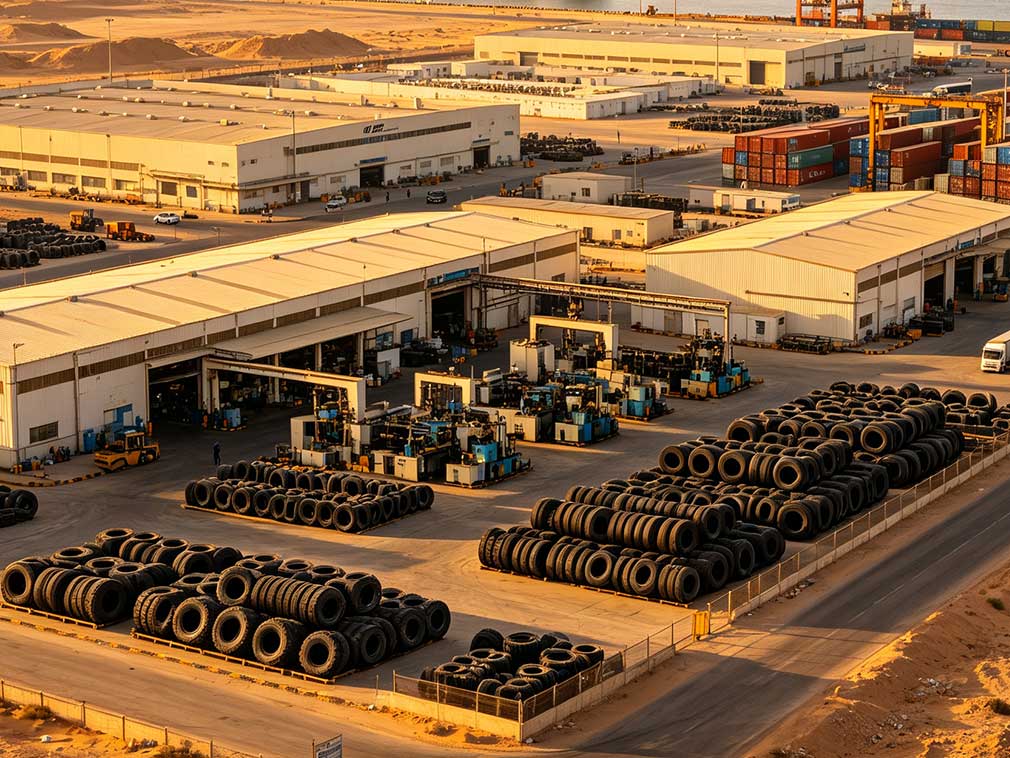
Southeast Asia was the earliest and most mature region for Chinese tire companies' overseas expansion. Long benefiting from well-developed supporting facilities, lower production costs, and tariff advantages, countries like Thailand, Vietnam, and Cambodia were once core areas for capacity expansion. Entering 2026, investment activity in the region has generally declined, with large-scale new capacity projects essentially halted, and the industry entering a new phase of relative capacity saturation and structural optimization.
A slowdown in investment pace does not necessarily mean exit. Leading companies are still focusing on existing markets and selectively supplementing their high-quality production capacity. In 2025, Zhongce Rubber increased its presence in Southeast Asia, planning to add 12 million semi-steel radial tires to its Thai production base, while steadily advancing the construction of its Indonesian base to improve its regional production capacity matrix.
In April 2026, Zhongce Rubber announced another plan to invest RMB 1.041 billion in Vietnam to build a project with an annual production capacity of 5 million semi-steel radial tires. This demonstrates that the Southeast Asian market has shifted from a "high-speed expansion" model to a mature development model of "refined operation and stock optimization."
II. North Africa: A New Core Region for Chinese Tire Companies' Global Expansion
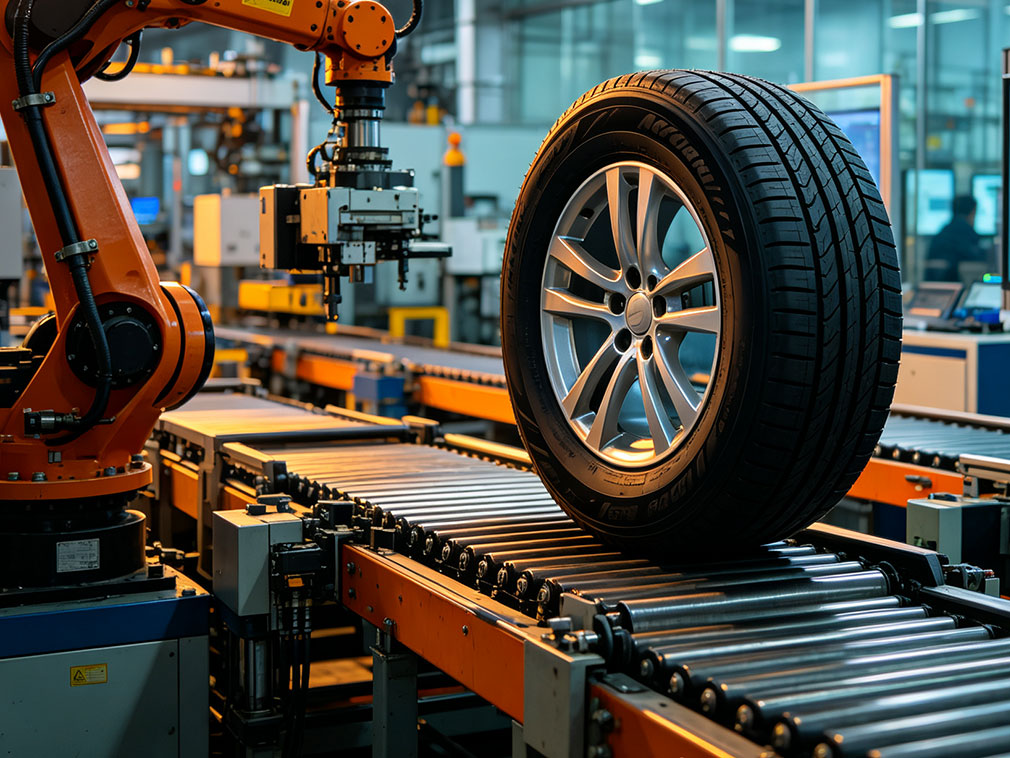
In contrast to Southeast Asia, North Africa became a region where Chinese tire companies concentrated their investments in the first half of 2026, becoming a new growth engine for overseas expansion. This wave of expansion can be traced back to the successful commissioning of Sentury Tire's Morocco plant in 2024. This project validated the feasibility of the North African route, thus opening an investment window in the region.
As of June 2026, Chinese tire companies have made significant investments in several North African countries. Total investment in Morocco is approaching 10 billion RMB, investment in Egypt is nearing 30.5 billion RMB, and a 1.7 billion RMB tire production capacity project is underway in Algeria. North Africa has become a key region for Chinese tire manufacturers' global production capacity layout.
Industry analysts believe that the North African strategy is not merely about establishing export channels to circumvent trade barriers with Europe and the US, but more importantly, about penetrating the high-end OEM market. Geographically, North Africa is adjacent to Europe and is a traditional overseas manufacturing base for many European automakers.
Renault and Stellantis both have factories in Morocco, and Stellantis is continuing to expand its local factory in 2026. Data shows that in 2025, Renault and Stellantis' vehicle production in Morocco both exceeded 500,000 units, providing considerable space for parts supply. Currently, Sentury Tire has entered the qualified supplier system of Renault and Stellantis, and its production capacity in Morocco will help deepen its supply relationships with major European automakers and enter the high-end supply chain.
Egypt's strategic advantage lies in its pivotal position and market reach. Leveraging the shipping capabilities of the Suez Canal, Egypt serves as a crucial link between the Mediterranean and the Red Sea, possessing a well-developed land, sea, and air transportation network that efficiently covers the European, Middle Eastern, and African markets. Simultaneously, Egypt's automotive assembly industry is rapidly developing, with approximately 25 assembly plants within the country. Domestic demand continues to grow, providing market support for tire companies to supply locally.
III. European and American Markets: Limited Investment Activity Due to High Cost Constraints
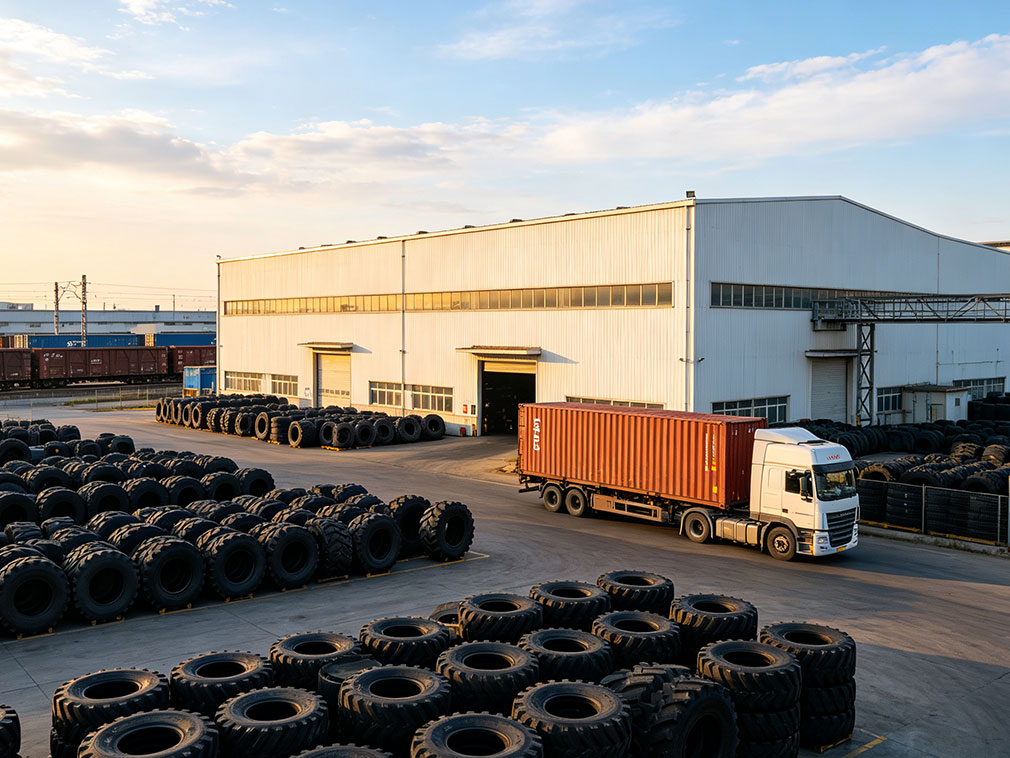
Besides Southeast Asia and North Africa, Chinese tire companies have also attempted to expand their production capacity in Europe and North America. However, overall investment activity is low, far less than in North Africa. The main constraint is the higher overall cost: land, labor, construction, and compliance operating costs in Europe and America are significantly higher than in Southeast Asia and North Africa, resulting in longer investment return cycles and limited profit margins.
This weakens the overall willingness of companies to expand, and these regions remain among the less active areas in the global tire production capacity landscape. Currently, global tire production capacity roughly presents a pattern of Southeast Asia approaching saturation, North Africa nearing saturation, and Europe and America remaining relatively stagnant.
IV. Multinational Tire Companies Continue to Expand Production, Global Investment Remains Strong
While Chinese companies are adjusting their global production capacity layout, multinational tire manufacturers have not scaled back; on the contrary, they have continued to increase investment, with overall investment levels no lower than, and even exceeding, those of their Chinese counterparts. Over the past three years, foreign brands have closed at least 20 inefficient tire factories, which represents capacity optimization and upgrading, not a signal of market exit.
Currently, there are new foreign-owned tire factories planned or under construction in many parts of Europe, America, and Asia. The largest single capacity investment in the global tire industry in 2026 will come from a foreign company.
On June 30, 2026, Italian tire manufacturer Pirelli announced a major investment project in the United States, with an investment of US$1 billion to US$1.2 billion (approximately RMB 8.1 billion). This single investment is a landmark project in the global tire industry in 2026, reflecting the continued strategic focus of multinational companies on cultivating the global market and securing high-end production capacity.
2026 can be seen as a turning point for the globalization of Chinese tire companies. The industry is moving away from its sole reliance on Southeast Asia, forming a diversified pattern of "deepening existing operations in Southeast Asia, expanding new operations in North Africa, and cautiously exploring Europe and America."
Enterprises are shifting their focus from exporting goods to high-end automakers and achieving comprehensive market coverage, entering a high-quality development phase. Meanwhile, the continued expansion of multinational tire manufacturers is intensifying global industry competition. Regionally differentiated strategies and upgrading to high-end production capacity will become the core trends for the industry's next stage of development.






