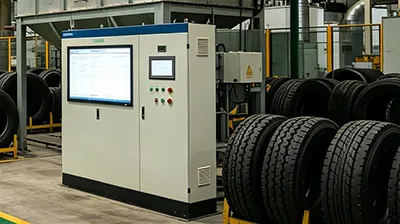
12R22.5 真空轮胎气压指南
在商用车领域,12R22.5无内胎轮胎因其出色的适应性和耐用性,是市场上应用最广泛的轮胎类型之一。对于车主和驾驶员而言,准确了解这些轮胎的标准气压,是确保行车安全、延长轮胎寿命以及控制运营成本的关键。然而,许多人误以为所有12R22.5无内胎轮胎都具有统一的标准气压,事实并非如此。

首先,让我们了解一下12R22.5无内胎轮胎常见的压力范围。根据市场上主流产品的情况,12R22.5无内胎轮胎在空载时的压力通常为8.5至9.5巴;满载时,压力一般需要提高到10至11巴。
该范围是轮胎制造商根据典型使用场景制定的参考值,并非绝对标准。产生这种差异的核心原因是轮胎的实际运行条件差异较大,而这些条件决定了不同的轮胎压力需求。
那么,为什么规格相同的12R22.5无内胎轮胎的标准气压会有所不同呢?第一个关键因素是车辆的实际载荷。作为车辆唯一与地面接触的部分,轮胎必须承载车辆自身的重量以及货物的重量。
当车辆经常满载时,例如用于长途货运且每次装载的货物重量接近车辆最大载重能力时,轮胎所承受的压力会显著增加。
在这种情况下,使用较低的气压会增加轮胎胎面与地面的接触面积,显著加大胎壁的压缩应力,容易导致轮胎过热、胎面磨损不均,甚至爆胎。
因此,重载车辆使用的12R22.5无内胎轮胎需要更高的气压来承载重量并保持其正常形状。相反,对于主要空载或轻载的车辆,例如用于城市配送的轻型卡车,过高的气压会减少轮胎接地面积,增加单位面积上的压力。
When a vehicle is frequently heavily loaded, such as when used for long-distance freight transport and the amount of cargo each time approaches the vehicle's maximum load capacity, the pressure on the tire increases significantly.
Using a lower pressure in this situation increases the tire's tread contact area with the ground, significantly increasing the compressive stress on the sidewalls. This can easily lead to excessive tire heating, uneven tread wear, and even blowouts.
Therefore, 12R22.5 tubeless tires for heavily loaded vehicles require higher pressures to support the weight and maintain their proper shape. Conversely, for vehicles primarily unladen or lightly loaded, such as light trucks used for urban delivery, excessively high air pressure will reduce the tire's tread contact area with the ground, increasing the pressure per unit area.

这不仅会降低驾驶舒适性,还会导致胎面中心过度磨损,缩短轮胎寿命。因此,此类车辆的胎压应适当调低至参考范围的下限。
第二个重要的影响因素是轮胎的结构设计和材料。不同厂家生产的12R22.5无内胎轮胎在结构设计上可能存在差异,例如帘布层层数、侧壁厚度以及帘线材料等。
胎体层级更多的轮胎整体强度更高,能承受更广泛的气压范围。因此,在相同载荷下,其推荐气压可能略低于胎体层级较少的轮胎。
The second important influencing factor is the tire's structural design and material. 12R22.5 tubeless tires produced by different manufacturers may vary in their structural design, such as the number of carcass plies, sidewall thickness, and cord material.
Tires with more carcass plies have greater overall strength and can withstand a wider range of air pressures. Therefore, for the same load, their recommended air pressure may be slightly lower than tires with fewer carcass plies. 轮胎采用高强度绳索材料,具有更强的抗拉伸和抗压缩能力,并且对气压的适应性更高。
此外,不同的轮胎橡胶配方也会导致其耐高温性和耐磨性存在差异。一些轮胎采用耐热橡胶材料制成,在高温环境下使用时压力波动相对较小,推荐气压可保持在标准范围内。
对于平均耐热性能的轮胎,制造商可能会建议将胎压保持在推荐范围的较低水平,以避免高温下胎压过高引发的安全问题。
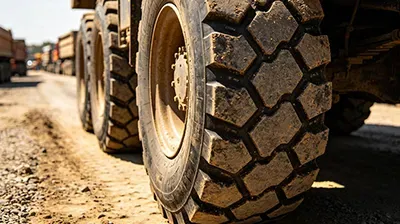
第三个不容忽视的因素是路况和环境温度。如果车辆长时间在崎岖的山路或颠簸的乡村道路上行驶,轮胎将频繁承受冲击和振动。在这种情况下,应适当提高胎压,以增强轮胎的抗冲击能力,降低侧壁损坏的风险。
另一方面,在平坦的高速公路上行驶时,车辆行驶平稳,轮胎受到的冲击较小,因此胎压可调整至标准推荐值。
环境温度也会显著影响胎压。由于热胀冷缩的原理,在炎热的夏季驾驶时,轮胎温度会迅速升高,导致胎压增加。
因此,夏季给12R22.5无内胎轮胎充气时,应避免充至参考范围的上限,需预留足够的膨胀空间。冬季气温较低时,轮胎气压会因温度下降而降低。
为确保轮胎性能正常,应适当增加胎压,以补偿因温度下降造成的压力损失。
除了上述因素外,车辆的轴荷分布也会影响12R22.5无内胎轮胎的气压。在同一辆卡车上,不同车轴的载荷分布可能不同,例如驱动桥通常比转向桥承受更大的重量。
因此,驱动轴上的12R22.5无内胎轮胎需要更高的气压来承受其所承载的重量,而转向轴的轮胎气压可以较低,以确保转向灵活和行驶稳定。
Ambient temperature also significantly affects tire pressure. Due to the principle of thermal expansion and contraction, tire temperatures rise rapidly during driving in hot summer weather, leading to increased tire pressure.
Therefore, when inflating a 12R22.5 tubeless tire in the summer, avoid inflating it to the upper limit of the reference range and allow for adequate expansion. In cold winter, the tire pressure drops due to the drop in temperature.
To ensure proper tire performance, the pressure should be increased appropriately to compensate for the pressure loss caused by the drop in temperature.
In addition to the aforementioned factors, the vehicle's axle load distribution also affects the pressure of a 12R22.5 tubeless tire. Within the same truck, the load distribution may vary across different axles. For example, the drive axle typically carries more weight than the steering axle.
Therefore, the 12R22.5 tubeless tire on the drive axle requires a higher pressure to accommodate the weight it carries, while the tire pressure on the steering axle can be lower to ensure steering agility and driving stability.