
2026 car trade in subsidy(August 13)
In accordance with the requirements of the "Notice of the National Development and Reform Commission and the Ministry of Finance on Implementing the Policy of Large-Scale Equipment Renovation and Consumer Product Trade-In for 2026" (NDRC Circular [2025] No. 1745, hereinafter referred to as NDRC Circular [2025] No. 1745) and the "Notice of Seven Departments Including the Ministry of Commerce on Implementing the 2026 Consumer Product Trade-In Policy for Quality Improvement and Efficiency Enhancement" (MOFCOM Letter [2025] No. 697, hereinafter referred to as MOFCOM Letter [2025] No. 697).
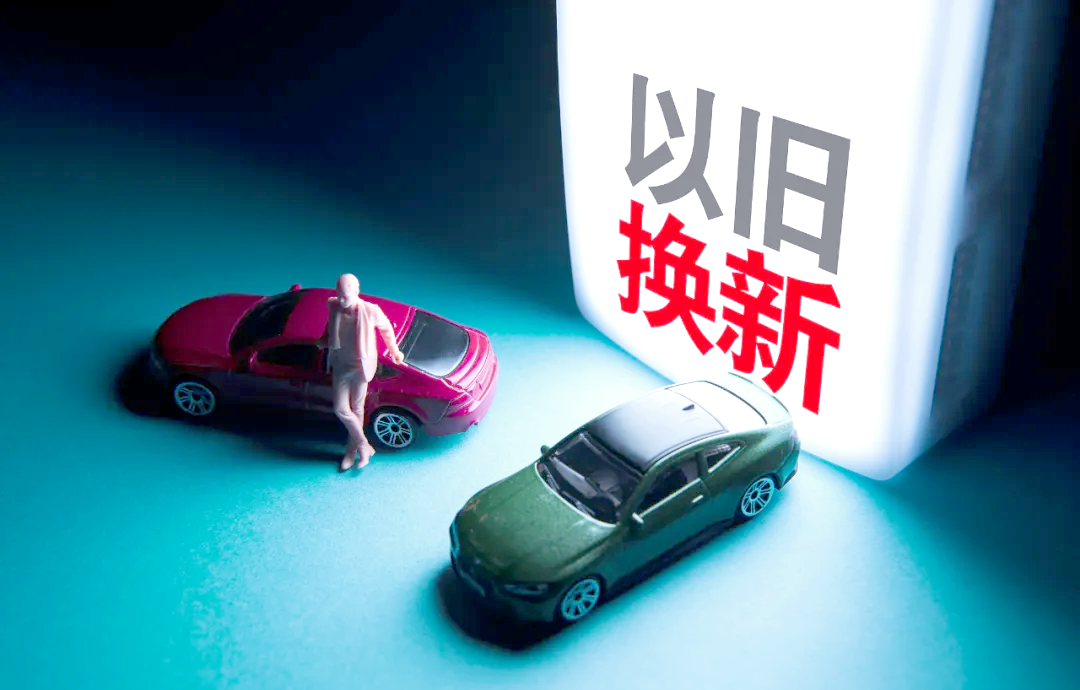
Implementation Rules for the 2026 Car Trade-in Subsidy Program
Chapter 1: Automobile Scrapping and Replacement
Article 1 In 2026, a one-time subsidy will be granted to individual consumers who scrap gasoline-powered passenger vehicles registered before June 30, 2013 (inclusive, the same below), diesel-powered passenger vehicles or other fuel-powered passenger vehicles registered before June 30, 2015, or new energy passenger vehicles registered before December 31, 2019, and purchase new energy passenger vehicles listed in the "Catalog of New Energy Vehicles Eligible for Vehicle Purchase Tax Reductions" issued by the Ministry of Industry and Information Technology, or fuel-powered passenger vehicles with a displacement of 2.0 liters or less. For scrapping the aforementioned eligible old vehicles and purchasing new energy passenger vehicles, a subsidy equivalent to 12% of the new vehicle's sales price (including taxes, the same below) will be provided, with the subsidy amount (rounded up to the nearest whole yuan, the same below) capped at 20,000 yuan; for scrapping the aforementioned eligible fuel-powered passenger vehicles and purchasing fuel-powered passenger vehicles with a displacement of 2.0 liters or less, a subsidy equivalent to 10% of the new vehicle's sales price will be provided, with the subsidy amount capped at 15,000 yuan.
Article 2: Individual consumers applying for vehicle scrapping and renewal subsidies must log in to the National Automobile Circulation Information Management System website or the "Car Trade-In" mini-program (hereinafter referred to as the National Car Trade-In Platform), enter the "Vehicle Scrapping and Renewal Subsidy Application Portal," and submit personal identity information, the vehicle identification number of the scrapped vehicle, original photos or scans of the "Scrapped Motor Vehicle Recovery Certificate" and "Motor Vehicle Cancellation Certificate," the vehicle identification number of the new vehicle, and original photos or scans of the "Unified Motor Vehicle Sales Invoice" and "Motor Vehicle Registration Certificate" (pages 1 and 2). The subsidy application must then be submitted at the subsidy acceptance location (i.e., the location where the "Unified Motor Vehicle Sales Invoice" was issued, the same below).
Article 3 For individual consumers applying for subsidies for vehicle scrapping and renewal, the submitted "Motor Vehicle Scrap Recycling Certificate," "Motor Vehicle Cancellation Certificate," "Motor Vehicle Sales Uniform Invoice," and "Motor Vehicle Registration Certificate" must all be obtained on or after January 1, 2026. Among these, the "Motor Vehicle Scrap Recycling Certificate" must be issued by a qualified motor vehicle scrap recycling and dismantling enterprise. The "Motor Vehicle Sales Uniform Invoice" and "Motor Vehicle Registration Certificate" must be issued or processed within the same provincial administrative region. The owner of the scrapped vehicle and the owner of the newly purchased passenger car must be the same individual consumer. The eligible old vehicle being scrapped must be registered under the applicant's name before January 8, 2025.
Chapter 2 Automotive Replacement Update
Article 4: In 2026, individual consumers who transfer their registered passenger cars through sales and purchase new energy passenger cars included in the "Catalogue of New Energy Vehicle Models Exempted from Vehicle Purchase Tax" of the Ministry of Industry and Information Technology, or fuel passenger cars with a displacement of 2.0 liters or less, will be given a one-time subsidy. For those who purchase new energy passenger vehicles that meet the above conditions, a subsidy of 8% of the new car sales price will be given, with a maximum subsidy amount of 15000 yuan; For those who purchase fuel passenger cars that meet the above conditions, a subsidy of 6% of the new car sales price will be given, with a maximum subsidy amount of 13000 yuan.
Article 5: Individual consumers who intend to apply for automobile replacement and renewal subsidies shall submit their subsidy application at the place of subsidy acceptance by logging into the automobile replacement and renewal information platform, filling in their personal identity information, the vehicle identification number of the transferred old passenger car, and the original photos or scanned copies of the "Unified Invoice for Used Car Sales" and "Motor Vehicle Registration Certificate" (pages 1-4), as well as the vehicle identification number of the newly purchased passenger car and the original photos or scanned copies of the "Unified Invoice for Motor Vehicle Sales" and "Motor Vehicle Registration Certificate" (pages 1-2).
Article 6: When individual consumers apply for car replacement and renewal subsidies, the invoicing dates stated in the "Unified Invoice for Used Car Sales" and "Unified Invoice for Motor Vehicle Sales" submitted by them, as well as the latest transfer registration date stated in the "Motor Vehicle Registration Certificate" of the old passenger car transferred and the registration date stated in the "Motor Vehicle Registration Certificate" of the newly purchased passenger car, should all be after January 1, 2026. The owners of old passenger cars and newly purchased passenger cars participating in the subsidy application should be the same individual consumer. The old passenger car transferred shall be registered under the name of the applicant before January 8, 2025; The newly purchased passenger cars that meet the conditions should have their "Unified Invoice for Motor Vehicle Sales" and "Motor Vehicle Registration Certificate" issued or processed in the same provincial region.
Chapter 3 Subsidy Review and Payment
Article 7 After receiving the application materials for automobile scrapping and renewal subsidies, the competent commerce departments in various regions shall, together with the departments of industry and information technology, public security, finance, taxation, etc., review them according to their functional responsibilities, and timely feedback the review results through the national automobile trade in platform; After the subsidy funds for car scrapping and renewal are disbursed, confirmation will be made on the national car trade in platform within 3 working days.
Article 8: Each region should further improve the functions of the automobile replacement update information system, establish a mechanism for information sharing and verification comparison among local departments such as commerce, public security, and taxation, and improve the efficiency of automobile replacement update subsidy review. The update information system for automobile replacement in various regions is integrated with the national automobile trade in platform according to unified standards, and real-time and comprehensive data on subsidy application and distribution is pushed through data interfaces as required.
Article 9: The national automobile trade in platform connects data from departments such as the Ministry of Commerce, the Ministry of Industry and Information Technology, the Ministry of Public Security, and the State Administration of Taxation, providing local governments with information verification and comparison services for the recycling and cancellation registration of scrapped passenger cars, registration and transfer registration of newly purchased passenger cars, transfer registration of old passenger cars, new energy passenger car models, the "Unified Invoice for Motor Vehicle Sales" for newly purchased passenger cars, and the "Unified Invoice for Used Car Sales" for transferred old passenger cars, to assist in the efficient review of subsidy application information.
Article 10: During the implementation of the car trade in policy in 2026, each individual consumer can only choose to enjoy one car scrapping and renewal subsidy or one car replacement and renewal subsidy. During the review period of the subsidy application for car trade in, the newly purchased car should be registered under the name of the applicant. The national automobile trade in platform provides relevant information verification and comparison services for various regions.
Article 11: If the information submitted by the applicant is true and complete, and meets the requirements of these detailed rules, it shall be reviewed and approved. If the information submitted by the applicant is incomplete or unclear and cannot be identified, the place of acceptance shall inform the applicant of the request for correction of information, and the applicant shall correct the relevant information through the original channel before the application deadline as required. For subsidy applications that meet the conditions, in principle, they will be accepted within 3 working days from the date of submission, reviewed within 15 working days, and the subsidy will be paid within 30 working days.
Article 12: Provincial commerce authorities, in conjunction with relevant departments, shall coordinate and determine the review levels and departments for subsidy applications within their jurisdiction, optimize the subsidy application review and payment process, and improve work efficiency. The competent commerce departments in various regions shall promptly summarize the information of applicants who meet the subsidy conditions, determine the subsidy amount after review, and submit funding applications to the finance department. Financial departments in various regions will disburse subsidy funds to applicants in accordance with the funding arrangements proposed by the competent commerce department. When submitting funding applications to the same level finance department, local commerce authorities need to submit funding arrangement suggestions to the local regulatory bureaus of the Ministry of Finance and the same level development and reform departments.
Chapter 4 Subsidy Fund Management
Article 13 According to the requirements of FGHZ [2025] No. 1745 document, the National Development and Reform Commission and the Ministry of Finance will arrange extra long term special treasury bond funds, and local governments will arrange matching funds as required to support local governments to implement subsidy policies such as car trade in. In 2026, the subsidy funds for car trade in will be used in a balanced manner on a monthly basis, and each region will combine the scale of local support funds to reasonably grasp the work pace.
Article 14: After the implementation period of the 2026 automobile trade in policy ends, the provincial commerce and finance departments shall submit the subsidy fund distribution situation to the Ministry of Commerce and the Ministry of Finance as required, and copy it to the National Development and Reform Commission. After summarizing and reviewing the subsidy fund distribution reported by various regions in accordance with relevant regulations such as the Development, Reform and Environmental Protection [2025] No. 1745, the central and local governments will carry out settlement.
Chapter 5 Supervision and Management
Article 15: All localities and relevant departments shall supervise and manage the work of automobile trade in subsidies in accordance with the provisions of the document No. 1745 of the Development and Reform Commission and the document No. 697 of the Commercial and Consumer Affairs Commission. They shall establish and improve joint supervision mechanisms among commerce, development and reform, finance, public security, taxation, market supervision and other departments to ensure the standardized and orderly implementation of subsidy policies.
Article 16: The competent commerce departments in various regions are responsible for supervising the review of subsidy funds. The supervision bureaus of the Ministry of Finance in various regions have strengthened spot checks on the management and use of subsidy funds. Public security, taxation and other departments in various regions have carried out vehicle registration, management of "Unified Invoices for Motor Vehicle Sales" and "Unified Invoices for Used Car Sales" according to their respective responsibilities, as well as information statistics and reporting, to ensure the safety of funds and timely distribution.
Article 17: All regions should deepen the implementation of fair competition policies and implement relevant requirements for fair competition review; Equal treatment and support for all types of business entities to participate in car trade in programs; It is not allowed to require the sale of old cars that are intended to be transferred or scrapped to designated enterprises, and no subsidy catalog or enterprise list with regional or technological product orientation shall be set up separately.
Article 18: All regions shall strengthen product quality and price supervision, strictly prevent fraudulent subsidies and other issues, conscientiously carry out subsidy review work according to their responsibilities, and may hire third-party units to assist in subsidy application review when necessary; For those who are found to have used improper means to obtain subsidy funds, produced and sold automobile products that do not comply with mandatory product certification, and engaged in illegal pricing, market supervision, public security, industry, and information technology departments at all levels shall handle them seriously in accordance with the law and regulations. Those suspected of illegal activities shall be severely investigated and punished in accordance with the law.
Article 19: All regions should open up channels for consultation on the policy of exchanging old cars for new ones, establish and improve mechanisms for policy consultation and complaint reporting, respond promptly to public demands, accept social supervision, and create a good atmosphere.
Article 20: For those who buy, sell, forge, or alter the "Certificate of Scrapped Motor Vehicle Recycling", assemble vehicles, and drive or dispose of scrapped vehicles on the road, relevant departments shall handle them in accordance with State Council Order No. 715 (Management Measures for Scrapped Motor Vehicle Recycling).
Article 21: Units and individuals who misappropriate or defraud subsidy funds shall be dealt with by relevant departments in accordance with State Council Decree No. 427 (Regulations on Penalties and Punishments for Fiscal Illegal Acts) and other relevant regulations.
Chapter 6 Supplementary Provisions
Article 22: The passenger cars referred to in these detailed rules refer to small and micro passenger vehicles registered with the public security traffic management department.
Article 23: These detailed rules shall come into effect from January 1, 2026. Provincial commerce authorities, in conjunction with relevant departments, shall formulate specific implementation rules for car trade in based on these rules and the actual situation in their respective regions, and steadily promote the smooth and orderly transition of subsidy policies.
Article 24: These detailed rules shall be interpreted by the Ministry of Commerce in conjunction with the National Development and Reform Commission, the Ministry of Finance, the Ministry of Industry and Information Technology, the Ministry of Public Security, the Ministry of Ecology and Environment, the State Administration of Taxation, and the State Administration for Market Regulation.
(This article has been edited)






